Saturday, March 2, 2024

The new prosthesis gives man feeling.


Technology advances. And modern prostheses might have the ability to feel things. This kind of prosthesis is a new tool for medical operations, and it can interact with the human nervous system using intelligent electrodes that deliver and receive nervous signals. 

This kind of system can used with intelligent neural wristbands. Those wristbands can connect the user's nervous system to the prosthesis. 

The same technology created for prostheses can used in hand-shaped manipulators. That prosthesis can also connected with a robot, that communicates with users over the internet. 

They can also used with remote-control human-shaped robots. In those systems, the controller can control robots using the BCI  (Brain-computer interface) or in more practical models the user can use the VR (Virtual Reality) Glasses, data gloves, and intelligent wristbands, that send neuro-impulses to the robot. 

That new prosthesis can increase the ability to make people's lives better after the amputation. These kinds of tools are turning human-robot hybridization closer. And that also improves the ability to use things. Like space suits and other protective systems. Technology created for that prosthesis can used to give the feel of touch to space suits. 


By the way...


In K.W Jeter's SciFi book Dr. Adder, the author predicted the weaponized prosthesis. The prosthesis uses a nuclear battery and it interacts with the human nervous system. The computerized prosthesis had IR cameras, that send the images to hand nerves. It used acoustic or laser systems whose mission was to destroy objects. Using modern nanotechnology is possible to create flat loudspeakers that can create sound that destroys red blood cells. 

This kind of system is possible to make quite soon. In some scenarios, surgeons can put that prosthesis on an amputated hand. And the surgeons who make that operation would put the hand into the cryogenics. 

When the mission is over the surgeon removes the prosthesis and reconnects the natural arm with the operator. The idea is stolen from the KGB execution machine, the high-voltage glove there are electrodes where there is high-voltage electricity. If that system touches a person, that causes deadly electric shocks. 


https://www.freethink.com/health/man-feels-hot-and-cold-again-with-prosthetic-hand-breakthrough


The new tiny accelerators can make a revolution in many technologies.


"Illustration of a shoebox-sized accelerator. An electron source and buncher/injector feeds into a sub-relativistic DLA (the device described in this article), which accelerates electrons up to 1MeV in energy. These electrons are further accelerated by SiO2 waveguide-driven relativistic DLA, and finally pass through an undulator to produce coherent free-electron radiation. Credit: Moore Foundation / Payton Broaddus" (ScitechDaily, Stanford’s Tiny Accelerator Promises Giant Leaps for Medical and Physics Breakthroughs)


New tiny particle accelerators are one of the most interesting things in the world. This system makes it possible to create new materials. And one of the purposes of this kind of particle accelerator is to shoot ions into diamond structures. This system can shoot other atoms in ion form in carbon structure because ions can push carbon atoms away from their route in diamonds. That makes it possible to make diamond-based quantum computers. 

Tiny particle accelerators can also used in material research. But those systems are also suitable for plasma stealth systems. The aircraft or any other vehicle can surround using low-energy ion or anion plasma, and that thing can used to create the layer that pulls radio waves in it. That thing can make the plasma stealth true. 

The tiny particle accelerators can be the ion engine system. In ion engines, those particle accelerators can act as ion accelerators. In weapon solutions, the target can load using plus or minus electricity. Then the ion cannon shoots particles with opposite polarity. That thing makes the system pull particles to the target. 

In some models, the system can use tiny particle accelerators in antimatter engine systems. In those systems, the particle accelerators shoot electrons or protons into the gold layer. Along with the magnetic field that thing forms the antimatter like antiprotons or positrons. The antimatter system can involve multiple tiny particle accelerators. 

The problem with high-power lasers that shoot outside the atmosphere is that those systems require massive power sources. And the only small enough energy source for those laser systems has been a neutron bomb. The neutron bomb will detonate around the laser element or at the side of the laser, it gives light to the laser element. 

The antimatter or annihilation flashes can used in laser systems. Those annihilation flashes can be as bright as hydrogen bomb explosions. And the antimatter systems can replace nuclear weapons in X- and futuristic gamma-ray lasers. The extremely bright light flash can create a very bright laser ray. That is as powerful as nuclear weapon-boosted lasers, where fission elements surround laser elements. Those weapons were the most powerful lasers planned to use outside the atmosphere. 


https://scitechdaily.com/stanfords-tiny-accelerator-promises-giant-leaps-for-medical-and-physics-breakthroughs/

Why must students learn, how to use AI?


When we want to allow something, that thing must not be allowed in all situations. We can use AI using our private cell phones anyway. At first, we must realize one thing. The AI is not the same thing as calculators. And the second thing that we should realize is that if a student makes texts at home or free time, nothing can deny the use of AI. The third thing is that AI requires very careful articulation. And the formation of the questions must made accurately. 

Also, the person who uses the AI must have a good knowledge of the topics, or the AI writes crab. The fact is that the working life requires the skill of the use of the AI. And most of us study for working life. The problem is that if students just copy-paste articles that the AI generates, that causes a loss of writing skills. And that is not a good thing. The use of the AI is very important. And the generative AI is a powerful tool. But the problem is a misuse of that thing. The generative AI is a tool that we can use on our cell phones. 

That thing makes it possible for a person can ask AI to make the answer, and then write that text that is on the cell phone's screen. Students can make texts using computers that they bought themselves, and that causes problems with control. Laptop computers are not very expensive and big investment, and there are no limits to the use of those systems. Then the person can send that text to the School computer using email. And that is one of the biggest arguments for allowing the use of AI at schools. There is no way to control those tools. 

The use of the AI must not be allowed in every situation. When we talk about the use of some tools, sometimes some people think. This kind of tool is allowed in every situation. That means that the use of AI can be limited in examination situations. In those cases, the network can limited to only to examination workspace. And that means the teacher can turn the classroom network to examination mode. 

If we think about cheating in examination situations. There is always a possibility that the teacher makes answers for some students. The use of laptops makes it possible to make sure that a student sits on a laptop while that person makes the examination. 


https://www.freethink.com/robots-ai/chat-gpt-students-writing

Wednesday, February 28, 2024

Beyond Moore's law (Virtual quantum computers)

   Beyond Moore's law (Virtual quantum computers) 


"Researchers at City University of Hong Kong have introduced a groundbreaking approach in semiconductor technology using mixed-dimensional transistors. This innovation paves the way for more efficient, high-performance electronics, overcoming the challenges of traditional downscaling and highlighting a significant leap towards advanced, multifunctional integrated circuits." (ScitechDaily, Beyond Moore’s Law: New Strategy for Developing Highly Versatile Electronics With Outstanding Performance Discovered)


The virtual quantum computer. 


The new state of magnetism called "alter magnetism" makes it possible to create a microprocessor tower, where each layer acts as one state of the qubit. The University of Hong Kong developed a multi-state transistor. There is the possibility that the next-generation binary computer microchips can involve multiple binary processor layers. Those processor towers can act like virtual quantum computers. In those systems, the AI-based operating system shares data flow into those microchip towers. In those towers, each microchip is one state of the qubit. 

And then to the cloud-based systems. 

Today, advancement in computer technology is faster than ever before. Open source artificial intelligence and the internet. Along with quantum computers, it is possible to create new and more accurate calculations than ever before. Nanotechnology and quantum engineering don't follow Moore's law. 

The quantum computer has shown its ultimate power. The new internet-based solutions make it possible to create multi-level systems that act like quantum computers. There could be multiple networked development units that work with the same kind of tools. The AI-based platforms can see things that they did. And then connect their work into one entirety. 

The modern microchip development is more than just making wires and other things. The system is the entirety where the software is integrated with the physical layer. Those nanotechnology-based solutions are more powerful than ever before. Quantum computers are excellent tools, and they can operate robots and other things through binary computers. In those systems robots, the system can use binary computers, that the quantum computer controls through the internet. 

The morphing neural network can turn the regular, binary networked computers into a system that acts like a quantum computer. In those systems, each binary computer that is in the network operates like one state of the qubit. 

The system shares data with each workstation like in a quantum computer. Each binary computer is one qubit state. And then those workstations operate with the data row bites like quantum computers. When the data passes those systems the AI will connect it into one entirety. 


However, the AI-controlled environment makes it possible to network multiple binary workstations into one entirety. That system would be the virtual quantum computer. 


The calculation system operates like the human brain, in a virtual quantum computer. The system makes the data row like it makes in the Internet and quantum computers, and then it shares the data with multiple binary workstations. In virtual quantum computers, each binary workstation acts as one qubit layer or state. That makes those systems more effective than they have been before. 

The AI can break the language barriers between developers, and cloud- based development environment makes it possible for the developer not to travel around the world physically. The person who does R&D work in the USA can use remote desktops and cloud-based workspaces from Stockholm and Helsinki, and the new nano-printers make the new composite materials and other things on the other side of Earth. 

Advanced CAM (Computer Aided Manufacturing) systems can create all things in the world, using CAD (Computer Aided Design) images. This is the Internet of Things. The CAD designer makes images and plans like material lists and then sends that thing to the manufacturing platform. The holographic systems allow designers to see what thing like furniture looks like in the room. 

The AI sees also things that people will not recognize. The AI can see errors in material homogenous structures. Error detection in the materials is urgent in nanotechnology. Laser-stroboscopes that give attosecond energy bursts can see the individual molecules and even individual electrons. New things like high-temperature superconductors and "Altermagnetism" are the ultimate tools for nanotechnology. 

That thing is the tool for making new types of wires, that don't form magnetic fields around them. In some cases, altermagnetism can replace superconducting wires and that thing can make it possible to create new and powerful microchips that don't make the heat around them. 

https://scitechdaily.com/beyond-moores-law-new-strategy-for-developing-highly-versatile-electronics-with-outstanding-performance-discovered/

https://scitechdaily.com/the-altermagnetism-breakthrough-a-new-dimension-of-magnetism-explored/

Tuesday, February 27, 2024

The nanodroplets and nanopolymers can be the next-generation tools for nanotechnology.


"A schematic illustration depicting the generation of microdroplets through the integration of inverse colloidal crystal structures into a microfluidic system. The system demonstrated the capability to produce over 10,000 droplets per second. Credit: Masumi Yamada from Chiba University" (ScitechDaily, Pore Power Unleashed: Revolutionizing Microfluidics With High-Speed Droplet Production) 

The high-speed droplet production can benefit systems that transport lots of viruses. Or otherways packed genetic material in the targeted cell cultures. The high-speed droplets can used to clean electric components or remove non-wanted cells from layers. Those systems also can destroy targeted cells shooting them with high-speed droplets. 

The nanodroplets can revolutionize fluids. The nanodroplets can used as acoustic transmitters. In that case, the droplet that can be gelatinous or hard will send in the structure. Then acoustic system makes that thing resonate. That resonance will send sound waves through the structure. However, the nanofroplets can used to carry polymers into the cells. 

Those droplets can carry the "Pumbler's Nightmare" BCP (Block copolymers) nanopolymers in the wanted points of the cells. Those structures are created using the Block copolymers, that can order autonomously. 


Scheme of a micelle formed by phospholipids in an aqueous solution (Wikipedia, Micelle). In micelle, the hydrophobic tails of other lipids can connect with the hydrophobic head of those lipids in the ball-molecule. 

The Micelle ball- polymers can act as touchpoints. And those balls can turn into long chains. Or they can be used to adjust the way how other polymer chains touch each other. The system can also create long polymer chains using those ball-shaped polymers that touch together. 


Researchers at POSTECH have successfully created the complex “plumber’s nightmare” structure in block copolymers, a groundbreaking achievement that paves the way for new applications in nano-technology and material science. This discovery demonstrates the potential for crafting diverse polymer nanostructures with tailored properties. (Artist’s concept). Credit: SciTechDaily (ScitechDaily, Turning the Impossible Possible: Korean Scientists Have Created the Notorious Plumber’s Nightmare Structure)


Visualization of nanostructures realized using di-end-functionalized BCPs. Credit: POSTECH (ScitechDaily, Turning the Impossible Possible: Korean Scientists Have Created the Notorious Plumber’s Nightmare Structure)


The new material called "Pumbler's Nightmare" is one of the examples of the new nanopolymer structures. 


Self-assembling and self-forming materials are the newest tools that AI and nanotechnology can create. The idea of those fundamental nanomaterials is that they are based on long polymer chains and there is no limit to the length of polymers. That thing makes it possible to create crystal-type materials. That can form certain structures. And that thing makes the new technology about things like self-repairing structures possible. 

In that material nanotechnology makes it possible to create the material that can make many things. Those nanomaterials can used to control tube leaks. Or they can used to replace antibiotics. 

In the ideal case, that material could change its form between solid and liquid. The system could turn those nanomaterials or molecules in different positions to make bonds or cut them between those molecules. If that thing is possible to make using acoustic impulses that material can replace some antibiotics and cytostates. 

The self-assembling complicated nanomaterials can also used in medical treatment for closing blood veins and filling injuries. The "Pumbler's Nightmare" is a hard nanostructure. Their nanopolymers form foam-like hard structures. The "Pumbler's Nightmare"  can also used to destroy cells, like bacteria that are resistant to antibiotics. In the ideal cases. That kind of nanomaterial could return to the liquid form when it gets some kind of signal. In some ideas, the acoustic system can turn those nanoparticles in a different direction. And then they cut the bonds between those molecules. 


https://scitechdaily.com/pore-power-unleashed-revolutionizing-microfluidics-with-high-speed-droplet-production/


https://scitechdaily.com/turning-the-impossible-possible-korean-scientists-have-created-the-notorious-plumbers-nightmare-structure/


https://en.wikipedia.org/wiki/Microfluidics


https://en.wikipedia.org/wiki/Micelle

https://en.wikipedia.org/wiki/Micelle#Block_copolymer_micelles


https://en.wikipedia.org/wiki/Self-assembly


Tuesday, February 6, 2024

Fusion energy: are we any closer than before?


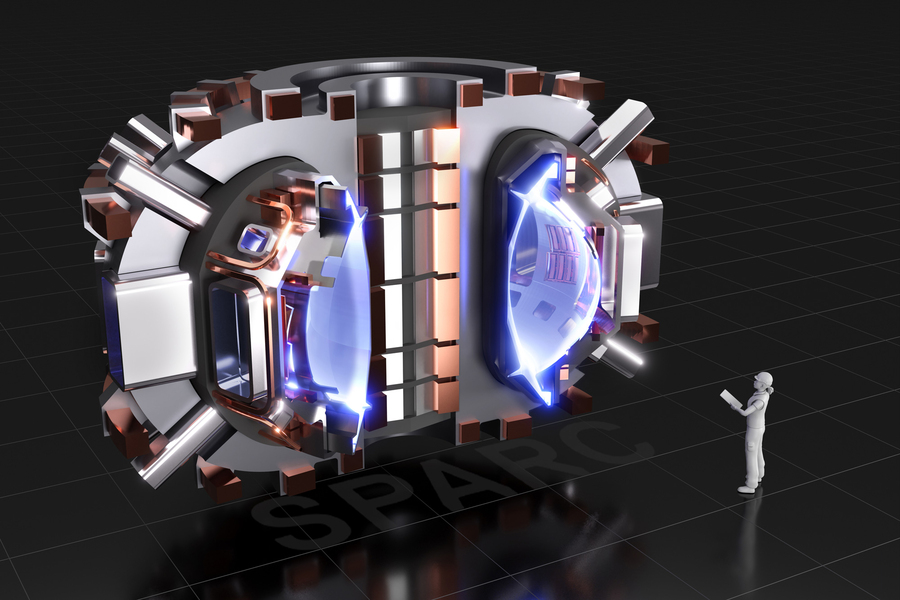
"This image shows a cutaway rendering of SPARC, a compact, high-field, DT burning tokamak, currently under design by a team from the Massachusetts Institute of Technology and Commonwealth Fusion Systems. Its mission is to create and confine a plasma that produces net fusion energy." (Credits:Image: CFS/MIT-PSFC — CAD Rendering by T. Henderson) (MIT, Validating the physics behind the new MIT-designed fusion experiment)


There are many reports of breakthroughs in fusion systems and fusion technology. And many people wait for new energy to form like the moon from the sky. The fusion energy would solve entire energy problems on Earth. But the problem is how to make a commercial fusion reactor. 

The temperature in those reactors is very high. If that plasma, that orbits the reactor in the wheel, or donut-shaped system touches the wall that thing would destroy the reactor immediately. In stars fusion happens in extremely high pressure and on Earth, the system must compensate for that pressure by increasing temperature. That means the fusion system must create a temperature. That is higher than the Sun's core. 

When fusion starts, light elements will melt together. Hydrogen's heavy isotopes, deuterium and tritium form helium when they melt together. The problem is that the system presses plasma using a magnetic field. Deuterium and tritium ions are both positive. And that means electromagnetic forces repel those particles away from each other. 

Some systems may make (as an example) deuterium ions, and tritium anions, that are negative tritium ions. That makes those ions pull each other together. And that makes it easier to impact those particles. However, the problem is that ions or monopolar ions are easier to control. Using magnetic fields. 

So the anion injection must made at the right point. The problem is how to deny anion injection touch with the wall of the torus. In tokamak reactors, positive magnetic fields push positive particles together and keep them off the wall. 


Tokamak reactor diagram.


One solution could be double tokamak where those toruses cross each other. In those cases, the system drives anions and ions into toruses, and then those particles impact in cross-points. 


In tokamak reactors, the anions are hard to control because the fusion system presses ion flow using the magnetic repel effect. So the system must use a linear structure. Linear fusion reactors are particle accelerators where the system drives plus and minus particles together. 

The problem is in ignition. When a laser beam ignites fusion. That thing causes an energy impulse. That destroys the particle flow. Electromagnetic repelling pushes those particles away from each other. And the outside magnetic field presses that plasma into its entirety. The problem is standing waves in the plasma ring. When fusion ignites it sends an energy pulse to that plasma wave. And that energy destroys the plasma structure and stops fusion. 

So how stars like the sun can create and maintain fusion? What keeps them together? The sun is a massive object. One thing that keeps plasma in its entirety in sun-scale objects is gravity. But the main thing that holds the sun together is the high energy fusion. That fusion turns 400 million tons of material into energy. That thing forms an interaction where the sun's core is forming low pressure. And gravity pulls particles in the sun's nucleus. 

Another thing that keeps fusion going is the electromagnetic repel. There is lots of plasma in the sun. And the electromagnetic interaction or repel effect happens around particles. The electromagnetic repel force from inside presses the particles together, and the thing that keeps fusion going on in the sun are gravity and electromagnetic forces together. 

So the electromagnetic repel pushes particles to the inside. It also affects particles. on the sun's shell. The magnetic fields and gravity keep holding the sun together. The problem with tokamak reactors is that they cannot benefit gravity. 


https://bigthink.com/the-future/nuclear-fusion-power-update/


https://news.mit.edu/2020/physics-fusion-studies-0929


https://en.wikipedia.org/wiki/Fusion_power


https://en.wikipedia.org/wiki/Tokamak


https://learningmachines9.wordpress.com/2024/02/06/fusion-energy-are-we-any-closer-than-before/

Monday, February 5, 2024

Drones require a new type of defense.

Credit:BigThink

Drones are effective weapons. They are small, cheap, and hard to shoot down. Or a defender can shoot down one drone can down if it sees the drone and aims a weapon at it. 

When somebody defends targets against drones, they must not get any drone travel through the defense line. The Ukrainian war has shown that simple, so-called dummy drones can cause damage if they are used as large swarms. 


Above:" The Huntress II Turbojet hybrid drone promises insane speeds and all-weather operation" WaveAerospace (New Atlas, Huntress hybrid drone packs a 300+ mph turbojet core)

The new tool in drone marketing is Huntress, a turbojet-powered quadcopter drone that can travel 30 kilometers. And the speed of that drone is 486 km/h. This kind of quadcopter can be the new type of loitering ammunition. The quadcopter can wait airborne and observe the right moment. Then it can attack against its targets which can be any military targets in the area. 

Thermobaric explosives make those systems more deadly than ever before. And they can destroy things like electric transformer substations. These kinds of drones are hard targets for defenders because they are so fast. Those drones can also cause vital damage to warships and submarines. If they can make holes in the submarine's hull or detonate radar antennas they can cause bad damage. 

Drones are also planned used as defensive tools. In some scenarios the drone swarms travel between incoming aircraft and targets. In those cases, the idea is that the jet engine pulls drones in their air inlets and the aircraft will impact them.


The mirrors over the battlefield can aim laser rays around corners and hindrances. 


Drones can used as a defense system also against hypersonic missiles. The impact of drones in hypersonic speed is devastating. In some scenarios, hypersonic missiles are equipped with high-power radio or microwave systems that get energy from RAT (Rapid air turbine) systems. Those systems should suppress the air defense before the missile impacts.  If those attackers use microwaves or some other EMP weapons they can sweep those drones out of their tracks. 

The lasers and microwaves are the tools that should drop those drones. There is a possibility that the 360-degree microwave field is around vital targets. Those microwaves can destroy drones before they reach the target. 

In that case, microwave transmitters are on every side of the building. And when the system activates them when the drones are coming. The microwave can affect the entire drone swarm. And in the same time, microwave weapons can destroy multiple drones. 

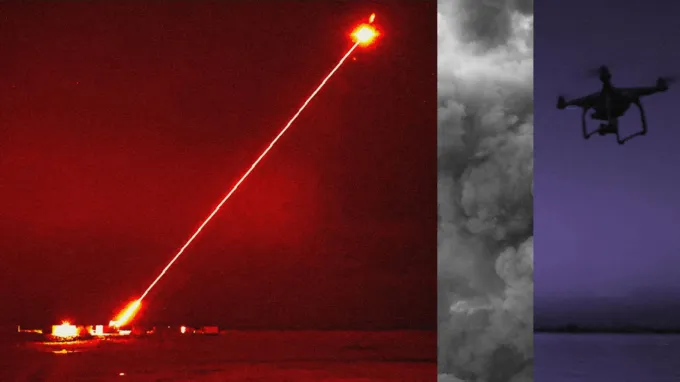
But laser weapons are also effective systems. The British defense ministry tested their new high-power Dragonfire-laser systems. The reason, why laser systems are not "very popular" is they "cannot shoot over the hills and houses". Many people think. That lasers are limited only to the anti-aircraft and anti-drone roles. 

The game is changing. There is a prediction that some "UFO observations are mirrors whose purpose is to aim laser rays at the targets. In those cases, small drones that carry accurately aimed mirrors can aim laser rays around corners and other hindrances. These kinds of systems are the ultimate tools for next-generation military applications. 


https://bigthink.com/the-future/uks-dragonfire-laser-weapon-downs-its-first-drones/


https://interestingengineering.com/innovation/lockheed-martin-laser-us-navy


https://newatlas.com/drones/huntress-turbojet-drone/


https://learningmachines9.wordpress.com/2024/02/06/drones-require-a-new-type-of-defense/

Sunday, February 4, 2024

Hydrogen is carbon-free fuel only if its producer uses carbon-free energy sources.


Hydrogen is an emission-free fuel. When pure hydrogen burns. It produces water. And that makes it the most interesting fuel that replaces natural gas like methane. Nothing limits hydrogen use as fuel in large-scale power plants that use natural gas. But hydrogen is also a promising fuel for small-size systems like local fuel cells and fuel cells that give energy to cars and other vehicles. 

One way to make pure hydrogen is to remove carbon from methane gas. But the other version is the electrolysis process. The problem with hydrogen production is where engineers can get green energy for the electrolysis process  In electrolysis, electricity breaks water molecules into hydrogen and oxygen. Renewable energy like wind and solar cells are good tools for producing electricity for electrolysis systems. That produces hydrogen. 


Hydrogen fuel cells are systems that allow to make carbon-free vehicles, and larger systems can use hydrogen. In some visions of the hydrogen economy, every single house has its fuel cells. And the AI-based system produces as much energy as the area needs. The bigger central power facilities are used only if the systems can't create enough energy. The system itself is one version of a traditional oil-heating system. 

Hydro plants are one version of green energy. There are plans to use overpressure of the water pipes for power use. The fact is that there are two ways to use that pressure. In some systems, there are some kind of bypass channels. 

But there is also a simpler way to use water pipes as an energy source. That system benefits the terrair shape. If those generators are at the hillside and the generators (water mills) are in the drinking water line that system would act like a normal tunnel hydro plant. 


There are two versions of tunnel hydro plants. 


1) The open system. In that traditional system, water flows through a turbine-like in all other hydro plants. The difference is that,  in those plants, water travels in tunnels. That thing can use natural water sources like lakes. 

The angle of those tunnels determines the power of the system. If the tunnel is at 45-90 degrees angle water drops through it very fast. In those systems, the capillary power can pull water to the hill. And then that water falls through the water line to the turbine. 


2) Closed or pump systems Or pumped storage power plants. In those systems when the system needs water, or the customer needs its energy, the water will flow through the turbine. Water itself is in two pools that are at different altitudes. When the system produces energy water flows from the upper pool to the lower pool. 

Then the pumps will raise water back to the higher pool. There is a possibility that part of the water will travel back to the upper pool using a capillary phenomenon. In that case, the system is not a perpetual motion machine, because the system pulls water up using pressure. 

In some visions, the pumped storage power plant is a tall tower. That tower pulls water up. And then it falls back through the generator wheel.  


https://scitechdaily.com/electrolysis-reimagined-turning-renewable-energy-into-green-hydrogen/

https://learningmachines9.wordpress.com/2024/02/05/hydrogen-is-carbon-free-fuel-only-if-its-producer-uses-carbon-free-energy-sources/

Friday, February 2, 2024

Electric power innovations. Fuel cells in aircraft and solar panels over Arizona canal.


"ZEROe teams powered on the iron pod, the future hydrogen-propulsion system designed for Airbus’ electric concept aircraft." (Intersting Engineering, Airbus's ZEROe: First engine fuel cell powers up for hydrogen flight)


Electric power innovations. Fuel cells in aircraft and solar panels over Arizona canal. 


Airbus Zero is a testbed for fuel cells that are used in commercial aircraft. The problem with aircraft is always noise and pollution. If the aircraft uses electric engines. That decreases noise levels and cleans the air, especially around airfields. Lightweight solar panels that can be installed on the wings and body of aircraft can give electricity to electric engines. And they can extend an aircraft's operational range. 

 The thing that makes this kind of system interesting is that the "flying cars" or cheap VTOL aircraft can use them as a power source. The hydrogen power cells can give energy to electric aircraft at night time. And that makes them more flexible than if systems use only solar panels. 

If we think of the aircraft of the future the aircraft can operate over the city areas using electric engines. When they are at longer distances those aircraft can turn to use jet engines. Solar panels make it possible. That hydrogen-powered aircraft can create fuel in its body. 

Hydrogen can also be used as fuel in turbines, ramjets, and scramjets. The hydrogen-powered aircraft can travel at supersonic- or hypersonic speed. Solar power makes it possible for those aircraft to use ecological fuel. The solar cells would use electrolytic chambers that split water molecules into hydrogen and oxygen. 

The water injection into the combustion chamber can increase the oxygen-hydrogen fuel's thrust. Normally, rockets use hydrocarbon as fuel because that fuel gives more pressure against the front side of the combustion chamber. The weakness of the hydrogen-oxygen fuel mixture is the weak thrust. 

The thing that limits the use of hydrogen and oxygen in rocket engines is high specific impulse. That means exhaust gas speed is so high, that there is no push to the forward. There is low pressure against the front side of the combustion chamber. And that decreases the hydrogen-oxygen mixture's thrust. However, water injection into the combustion chamber will increase the thrust. 


"Project Nexus could save water while generating solar energy". (Interesting Engineering, Arizona's solar-over-canal project tackles drought — here's what we know)


The solar panels can used to cover aqueducts. 


There is a plan to cover the Arizona Canal in the USA using solar panels. Those panels can protect water. And they can deliver energy to the electric network. The power of those solar panels could be 13 terawatts. And it can deliver energy to Los Angeles in ten months. Another use of those solar panels would be the cooling system that denies water vaporizations. And those solar panels also increase the security of those water supply systems. 

Blinders or turning modules allow systems to adjust solar cell's energy production. In the last case, the silicone layer that produces electricity is installed on the square-shaped rod. That rod can made of wood. Solar panels cover one of its sides. When the system produces too much energy, part of those rods turn the solar panel off the sun's direction. That helps to adjust energy production. 

In the wildest visions, that kind of solar panel system can deliver energy to the particle accelerator or modular supercomputers. The computer or accelerator system will installed in those solar panel elements. If there are blinders, commonly used in windows or modular solar panels can turn their electric-producing silicone layer away from the sun which denies the overload. When the system requires more energy, it turns more electric production components to the sun. Turning elements allow for adjustment of the solar cells' power. 

The main problem with aqueducts or water channels that deliver water to cities, especially in sunny and warm areas is vaporization. Every time, when sunlight vaporizes water, that thing means that water will go somewhere else than it should. Cities like Los Angeles require lots of water, and the problem is clean water. 

In some visions, solar panels can used to cover the water supply system. Especially open water supply canals are places where water vaporizes. And another thing is that they are vulnerable to sabotage. 


https://interestingengineering.com/innovation/airbuss-zeroe-first-engine-fuel-cell-powers-up-for-hydrogen-flight

https://interestingengineering.com/science/arizonas-solar-over-canal-tackles-drought


https://learningmachines9.wordpress.com/2024/02/03/electric-power-innovations-fuel-cells-in-aircraft-and-solar-panels-over-arizona-canal/

Tuesday, January 9, 2024

Technical telepathy. And its risks.


"A team from Duke University has created a speech prosthetic that translates brain signals into speech, aiding individuals with neurological disorders. While still slower than natural speech, the technology, backed by advanced brain sensors and ongoing research, shows promising potential for enhanced communication abilities. (Artist’s concept) Credit: SciTechDaily.com" (ScitechDaily.com/Not Science Fiction: Brain Implant May Enable Communication From Thoughts Alone)


The BCI (Brain-Computer Interface) allows one to communicate with thoughts. But those systems have their risks. Technical telepathy means the (usually) surgically implanted microchips that can offer an interface to other computers. And if hackers can hack that microchip, the results could be catastrophic. 

The AI and neuro- or brain implants allow people to communicate using thoughts. This kind of thing is also revolutionizing BCI systems. Those microchips can interact with other species' nervous systems. And they also can transmit information from the surveillance cameras. The idea is that those microchips send signals straight to the brain lobe, which is responsible for certain senses. 

In interactive brain implants, the AI decodes EEG to thoughts to text application that sends the data to command lines. The system can benefit the Wernicke-lobe that produces speech. In the case where a robot or computer sends data to a certain brain lobe, that thing allows the system to create virtual memories. Because that kind of system passes normal neural tracks it causes the effect that a person cannot separate real memories from the memories that this system transmitted to the brain. 

They are allowed to use cell phones using thoughts. This kind of system can be the base for the next-generation technical PSI or remote view. Neuroimplats are impressive tools that can control robotic exobodies and other robots. The fact is that the neuro-implanted person can also control dogs and bugs that are under microchip control using their brainwaves. Researchers make work with BCI systems that don't require surgical operations. Those systems are so easy to wear as hats. 

The misuse of the BCI is possible. The system can create false memories and control people's thoughts. This thing should be mentioned when researchers are working with interactive BCI systems. Surgically implanted chips are dangerous if somebody hacks them. And this is one reason why this kind of research must be public. 

The AI and the BCI systems that decode human thoughts can be terrifying tools in the wrong hands. The system can used to control people. And in some very scary visions, the interactive BCI system will read all thoughts. That humans have. And then if it sees marks of rebellion, the system stimulates the brain areas that control pain. These kinds of systems are scary and effective things. 

AI is one of the systems that are concerned with marketing. Things like our knowledge of subconsciousness allow the AI to create material that affects, especially subconsciousness. This is the reason, why the Internet should filter things like subliminal effects from marketing materials. Also, people who work with the BCI should be careful because if the microchip that is used to communicate with computers is hacked, that can cause catastrophic situations. 


https://scitechdaily.com/not-science-fiction-brain-implant-may-enable-communication-from-thoughts-alone/


https://scitechdaily.com/the-dark-side-of-ai-how-our-subconscious-is-at-risk/


https://learningmachines9.wordpress.com/58-2/


Sunday, January 7, 2024

The supercrystals are making the new advanced materials and intelligent clothes possible. But they can revolutionize chemistry.

The main problem with intelligent clothes and materials is energy. Solar panels and nano-size generators can give energy to the system. Those systems must be small enough. That they can be effective and comfortable. 

The amorphous silicon or silicon carbide is 10X stronger than Kevlar. That thing can used in the next-generation clothes. The amorphous silicon can form the layer above the plates. And that makes it possible to create new types of highly advanced armor that cover the entire body. 

When we think about the extra-hard crystals they are impressive. But if microprocessors control the structure. That can form small robots. That thing makes them more impressive than ever before. 


"Professor Emiliano Cortés, at LMU, is revolutionizing solar energy capture through nanotechnology. By developing plasmonic nanostructures, his team creates materials that concentrate solar energy more efficiently. Their latest breakthrough, a supercrystal that produces hydrogen from formic acid using sunlight, holds the world record in its field. Credit: SciTechDaily.com" (ScitechDaily.com/Harnessing Sunlight Like Never Before: The Supercrystal Breakthrough)


"Scientists have developed amorphous silicon carbide, a strong and scalable material with potential uses in microchip sensors, solar cells, and space exploration. This breakthrough promises significant advancements in material science and microchip technology. An artist’s impression of amorphous silicon carbide n anostrings testing to its limit tensile strength. Credit: Science Brush" (ScitechDaily.com/10x Stronger Than Kevlar: Amorphous Silicon Carbide Could Revolutionize Material Science) Those silicon carbides can connect using thin and flexible carbon fibers. 

The amorphous crystals can also be used in electrochemistry. In electrochemistry, those super crystals can used as magic sticks that can push and pull ions and anions on the layer. The system can make a revolution in the processes. That electric system makes complicated structures like in medicine creation.  The small size makes it possible to control those electric shocks with very high accuracy. 


"University of Chicago scientists have developed a way to improve chemical reactions in drug manufacturing using electricity. This breakthrough in electrochemistry, enhancing efficiency and sustainability, opens new avenues in green chemical production. Credit: SciTechDaily.com"  (ScitechDaily.com/The Shock Factor: Electricity’s Revolutionary Impact on Chemical Synthesis) 


The highly accurate electric shocks allow the system can control the electron shell position around the atom. The shock system can adjust the touching points of atoms and molecules. 

This type of system can connected with photoacoustic systems. In a photoacoustic system laser ray creates electricity to the structure. That electricity makes the structure oscillate and it sends pressure waves. The system can be two internal fullerene tubes where the outer layer is covered with a 2D silicone structure. The photoelectric phenomenon makes this system oscillate. And the magic stick can move neutral atoms or molecules over the layer. 

The photoacoustic systems can used as a small-size SONAR system, that can take images of the nervous system. The photoacoustic systems can also take similar images of small fibers. This type of system can also used to create nano-bubbles in blood vessels. That takes nutrients for the cancer cells. The photoacoustic system can use human blood cells that it turns to rotate vertically. When the rotating speed of those blood cells is high enough they create a phenomena, called supercavitation.  

Those rotating blood cells make low pressure behind those rotating layers. And that thing forms the microbubbles. The microbubbles can also be used to replace traditional antibiotics. The bacteria eats some small plastic plates, Then the acoustic system starts flipping them. That thing can fill bacteria with microbubbles that can be effective against antibiotic-resistant bacteria. 


Samurai armour.


The amorphous silicon can cover small titanium plates. Or it can form structures that are known for gold necklaces. That makes it possible to create a cube-looking amorphous silicone structure that makes a strong and flexible structure. Those cube's size could be less than a millimeter. Miniature screens can also used for those kinds of systems. 


In intelligent solutions, there may be small screens outside those plates. This makes the invisibility cloak look like a samurai armor. Over those plates can also put the carbonite crystal. That is used in spacecraft glasses. 

If there are small cameras around the suite those screens can make the suit invisible. Those cameras can also send information to the VR (Virtual Reality) or AR (Augmented Reality). The system can tell the user where is other people. And where the threat is coming. This same system can used in helicopters and aircraft. 

The silicone cubes may have small nano-size generators. When the structure moves that generator produces electricity. The silicone cube may be a microchip. The silicone crystals can also covered with a 2D silicone structure. That structure can act as solar panels. And this thing makes intelligent solutions possible. 

The miniature robot cubes or robot bricks can form the non-organic version of the neurocreatures. In that kind of artificial neurocreature, the microchips act as neurons. And the system can connect the processor's power into one entirety. 

In one solution those crystals can be robots that can create clothes or close leaks in tubes, and aircraft and ship's bodies. The nanorobots are very suitable tools for many missions. The thing is that the nanomachines can act like automatized Lego bricks. They can create structures automatically. 


https://scitechdaily.com/10x-stronger-than-kevlar-amorphous-silicon-carbide-could-revolutionize-material-science/


https://scitechdaily.com/advanced-nerve-visualization-with-photoacoustic-imaging/


https://scitechdaily.com/harnessing-sunlight-like-never-before-the-supercrystal-breakthrough/


https://scitechdaily.com/the-shock-factor-electricitys-revolutionary-impact-on-chemical-synthesis/


https://learningmachines9.wordpress.com/the-supercrystals-are-making-the-new-advanced-materials-and-intelligent-clothes-possible-but-they-can-revolutionize-chemistry/

New winds for interstellar probes.

“Light sails can propel spacecraft using the energy of the Sun. Credit: NASA/Aero Animation/Ben Schweighart” (ScitechDaily, Humanity May Soo...