Showing posts with label SONAR. Show all posts

Tuesday, February 27, 2018

How can the mobile telephone be used as 3D-modelling?


(Picture 1)


https://www.instagram.com/p/BfbSDw5FIdC/

Kimmo Huosionmaa

How can the mobile telephone be used as 3D-modelling? The answer to that question is simple. This thing uses the same device, what would focus lens of its camera. It also connects the data from the camera of that telephone. So this makes those mobile telephones very sophisticated tools for modeling. The problem of those scanners is that the mobile telephone must be absolutely stable, or the modeling would be failed.


But this can be solved by using selfie-stick, what is installed on the table or stable platform, and if the hands of the stable enough, the scanning can make by keeping the device in hand. But the fixing of this problem could be found from GPS. If this system would be sharp enough, the telephone could fix the errors, what shaking hands causes. In this solution, the GPS would map the place where the telephone is in the sharpness of only small part of the millimeter, and the computer would calculate the errors of the metering.


The system would take the original point, when scanning is beginning, and then it would fix the error what the shaking of hands might cause. This would be done by adding or subtracting the location in the real world of the phone, from the values of the pure ring. This would make the scanning more easier. This little program can revolutionize the CAM (Computer Aided Manufacturing) -technology.  Now any firm can buy this kind of equipment and use it as making 3D-models for CAD programs and 3D printers.


In this system, the computer in the mobile telephone transmits the distance between the target and telephone by using sonar. Sonar is almost as effective scanning tool as a laser, but the sound travels in the air much slower than air.


The optics of the mobile telephone would focus using Sonar and the situation where the user notices it is when this person wants to take a picture what portraits horizon. In this case, the system of the camera cannot get an echo from the surface, and the optics of camera cannot focus the image.


I have read some articles that same radars what are used in traffic light as traffic calculation sensors could be mounted to RPV-helicopters. Those helicopters can be used to make 3D-models of entire building areas. They use oblique scanning, what is connected to GPS and computing platforms to make 3D models of buildings. The computers would make 3D pictures by those pictures, what this device sends to computers.

Monday, December 18, 2017

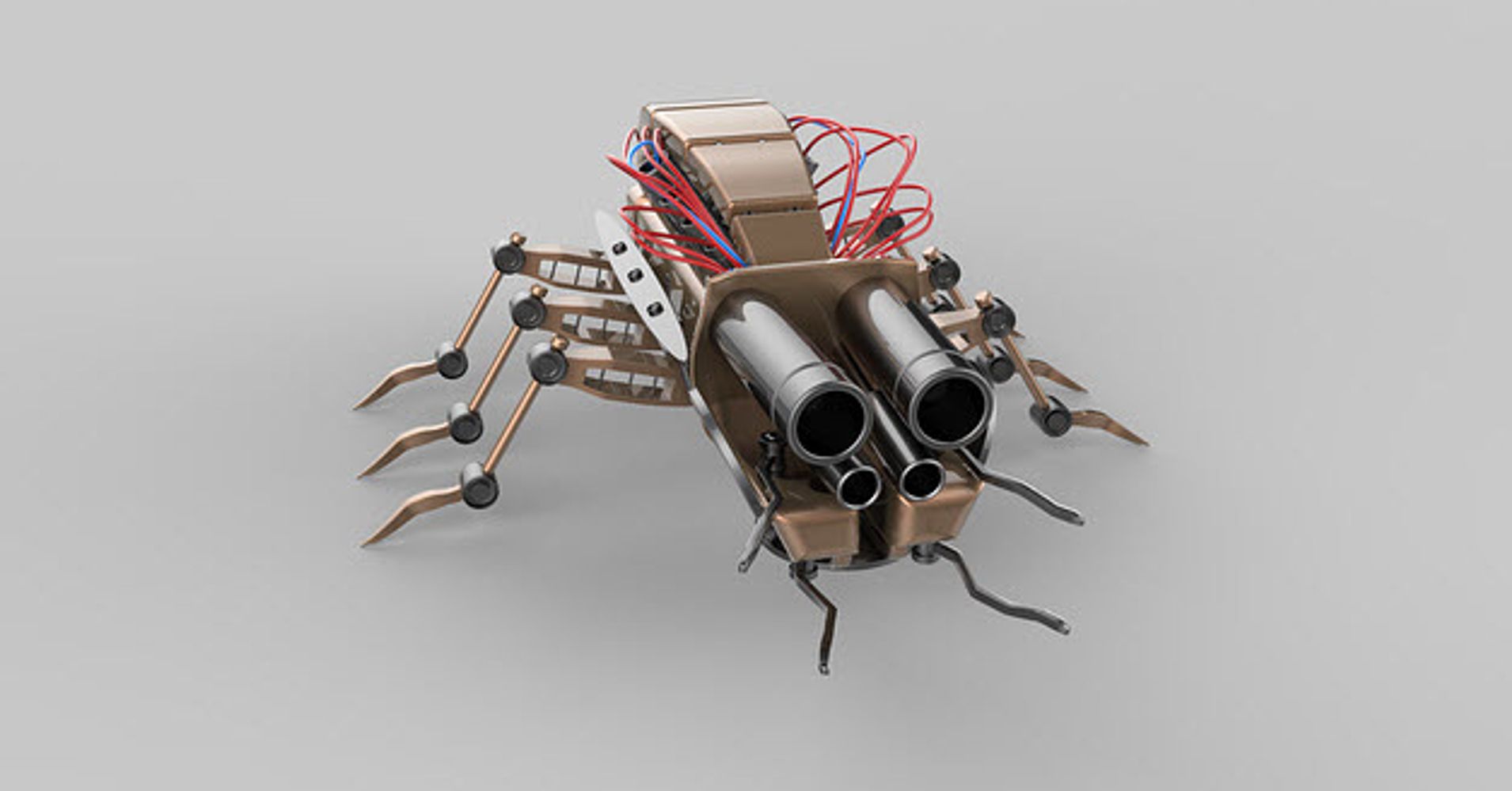
Robot bugs are the advantage for many things, and they can revolutionize the entire science.

Picture 1


Kimmo Huosionmaa

The robot bugs or MAV.s (Miniature Aerial (Autonomic) Vehicle)  are the most revolutionary air devices what are ever created. Those tiny little flying robots can manufacture large numbers in automatized factories even by using garbage as the production material, and this kind of manufacturing technology will give the change to produce those robots even in the operational area. The robot factories are not bigger than the containers of the trucks. And they are very easy to transport, and they will use sophisticated 3D printing and laser base cutting methods, and only thing what is needed is the production material, what is used when those little robots are made. Those tiny robots are capable to survey extremely large areas, and they can deliver from the airplanes and satellites.


The use of those instruments based on the swarms, and that's why those robot bug swarms  can equip with so various sensors, and even if one particle of the swarm of those robots does have only one sensor, there is maybe even thousands of those things, and the entire mass of them gives change to make very good scale observations of some area. The nanotechnological bugs are the very potential opportunity, when human been creates space probes, what mission targets are somewhere near Jupiter or Saturn. In this scenario, the space probe launches thousands of nanotechnological fly sized nanorobots to those gas giant's atmosphere and their moons. Those little robots might be inside the ice core, what allows them to fly in the target planet’s atmosphere.


The ice core will protect them from burning, and then the melting ice will release those drones to the planet atmosphere. In some scenarios, those nano bugs will put inside little iron or lead core, and then those little robots will put inside the Earth to investigate the liquid basalt, and those drones can communicate with the surface platforms with SONAR-systems, what are modified as the modems. Those drones can sink in the near of the nucleus of the Earth. In this scenario, the lead will protect those probes from the extreme heat of the melting magma, and this ball has been covered with chromium against massive pressure.


Those drones can send the new information to the Earth inner core. And they can drop inside the craters of the volcanoes. The shape of the ball protects them against massive pressure, and they might look like bearings hard balls. Those miniature probes can deliver inside volcanoes to investigate the behavior of those devastating things. And of course, they can use to observe the things like tornadoes, and in this case, the container, what involves that equipment will just put in the front of the tornado, and then the air turbulence will suck those things up the atmosphere, and the scientists can observe the micro-turbulence of the tornado. This might help to create things, what can decrease the wind speed of that turbulence.

New winds for interstellar probes.

“Light sails can propel spacecraft using the energy of the Sun. Credit: NASA/Aero Animation/Ben Schweighart” (ScitechDaily, Humanity May Soo...