Showing posts with label lasers. Show all posts

Sunday, October 27, 2024

Thermophotovoltaic cells can make energy production more effective.


"Researchers are exploring thermophotovoltaic systems that generate electricity from heat, highlighting their potential in sustainable energy." (ScitechDaily, Harnessing Heat for Clean Energy: The Future of Thermophotovoltaic Technology)

"Researchers are advancing thermophotovoltaic (TPV) systems, which convert heat into electricity using photovoltaic cells, presenting a silent and low-maintenance energy solution." (ScitechDaily, Harnessing Heat for Clean Energy: The Future of Thermophotovoltaic Technology)

Thermophotovoltaic cells allow to use of laser beams to transport electricity to drones and other electric components. Thermophotovoltaic cells are applications that can increase the energy efficiency of the engines and electric supply systems.  

Thermophotovoltaic cells convert heat to electricity. Those systems can operate independently. 

Thermophotovoltaic cells can operate with regular energy sources using their heat to make electricity.  

They can harness energy from boiling water from the water supply system. And the small robots. Observe the system conditions can use those tools for energy supply. 

The thermoelectric photovoltaic technology can collect energy from the engine of the hybrid cars. That system can harness energy from the combustion engine's heat. And it can boost the engine efficiency. It also loads batteries faster. 

The fact is that thermophotovoltaic technology can increase the energy efficiency of all power plants. Engineers can use this kind of system to make new points where they collect energy. And if thermophotovoltaic cells can someday turn to large-scale use those systems can harness energy from geothermal holes. 

Also, dark layers can give energy to thermophotovoltaic cells.  That can used together with regular solar panels. The thermophotovoltaic cells can collect energy from blast furnaces which decreases the need to buy electricity.  

Thermophotovoltaic cells can also be used in next-generation Venus landers. Those systems can also give energy to robots that operate in high-temperature environments. There are many potential useful things for that technology. The ability to turn heat or IR radiation into electricity can be useful in military applications that require low-observable energy sources that don't operate in radio frequency. 

That means. The IR-laser system can deliver electricity to small drones or other electric equipment. Those drones can operate in caves and places where they cannot land. The ability to use laser beams to load electricity to the small quadcopters is one of the most fundamental ideas in robotics. Those lasers can also be used to transport information to drones. The system can have multiple useful applications. From the scientific to the military world. 


https://scitechdaily.com/harnessing-heat-for-clean-energy-the-future-of-thermophotovoltaic-technology/

Monday, September 18, 2023

The SLAC National Acceleration Laboratory created the most powerful X-ray laser.

 The SLAC National Acceleration Laboratory created the most powerful X-ray laser. 


Researchers are developing X-ray lasers because they offer new abilities for information, weapons, and material research. In communication tools X-ray lasers can use technology where the system sends highly accurate X-ray impulses to the two receivers. When the X-ray beam hits receiver A it gives a value of 1 (one). And when the X-ray beam hits receiver B the value could be zero (0). 

That kind of system requires AI-based kernels. But X-ray systems can communicate through walls. And that radiation is very hard to capture. So X-ray lasers provide a new and secure communication tool and they also can be used in photonic computing. The problem is that there are no mirrors that can reflect X-rays, and that makes X-ray lasers hard to develop. 


"The newly upgraded Linac Coherent Light Source (LCLS) X-ray free-electron laser (XFEL) at the Department of Energy’s SLAC National Accelerator Laboratory successfully produced its first X-rays. The upgrade, called LCLS-II, creates unparalleled capabilities that will usher in a new era in research with X-rays. Credit: Greg Stewart/SLAC National Accelerator Laboratory"(ScitechDaily.com/A New Era of Atomic Science: SLAC Fires Up the World’s Most Powerful X-Ray Laser)


"The linac is equipped with two world-class helium cryoplants. One of these cryoplants, built specifically for LCLS ( Linac Coherent Light Source)-II, cools helium gas from room temperature all the way down to its liquid phase at just a few degrees above absolute zero, providing the coolant for the accelerator. Credit: Greg Stewart/SLAC National Accelerator Laboratory" (ScitechDaily.com/A New Era of Atomic Science: SLAC Fires Up the World’s Most Powerful X-Ray Laser)


"Cutaway image of a cryomodule. Each large metal cylinder contains layers of insulation and cooling equipment, in addition to the cavities that will accelerate electrons. The cryomodules are fed liquid helium from an aboveground cooling plant. Microwaves reach the cryomodules through waveguides connected to a system of solid-state amplifiers. Credit: Greg Stewart/SLAC National Accelerator Laboratory" (ScitechDaily.com/A New Era of Atomic Science: SLAC Fires Up the World’s Most Powerful X-Ray Laser)


The most powerful X-ray laser is starting its actions. The system called Linac Coherent Light Source (LCLS) is the free-electron X-ray laser that can make coherent X-ray impulses. Those high-accurate impulses can be used to research atoms and make high-accurate R&D work with fundamental materials. 

The system can send millions of X-ray flashes in seconds. And that makes it possible to use that system in X-ray-based rapatronic technology. In that technology, the X-ray system uses X-ray movie cameras for collecting data from objects. The X-ray movie cameras are the cameras that use X-ray films. And they can observe the material's development. The X-ray rapatronic camera is a rapatronic camera that was developed for research nuclear tests. 

And in X-ray-based technology, those rapatronic cameras use X-ray films. Researching the internal structures of atoms and molecules requires very high-accurate X-ray impulses. The new X-ray lasers can be the most accurate systems that can follow the processes where crystals are forming. The thing is that there are many ways to create X-ray systems, and one of them is to use free electron lasers. The free electron lasers are particle accelerators where electrons travel meandering. Whenever an electron changes its direction it sends a photon. 

The benefit of free-electron lasers is this: the system can adjust the wavelength of their radiation. It is also possible to use cathode tubes that send radiation emission into the X-ray beam that travels in the middle of the system. So the system looks like the LRAD. The problem with cathode-based, solid-state systems is that they do not have enough high accuracy for high-class scientific work. However, weapon applications can use those X-ray lasers. 


https://scitechdaily.com/a-new-era-of-atomic-science-slac-fires-up-the-worlds-most-powerful-x-ray-laser/

https://en.wikipedia.org/wiki/Rapatronic_camera

Monday, September 11, 2023

The new systems allow researchers to control qubits better than any time before.

  The new systems allow researchers to control qubits better than any time before. 


The new observations about electron's permanent dipole movement are pathfinders for atom-size quantum computers. Precisely working quantum computers require the ability to control the system with extremely high accuracy. That ability requires that the system can observe its actor and a new type of sensor makes it possible to create new types of qubits. The ability to measure electrons' dipole movement makes it possible to create sterile photons with high-accurate energy levels.

Because the system sees the actor like electrons it can shoot very highly accurate laser beams into those quantum systems. If the system can make atom-size quantum computers those systems will be the most advanced tools that researchers have ever created before. 

The atom-size quantum computer that operates at room temperature can turn even nanomachines intelligent. In some visions, researchers can put atom-sized quantum computers inside living neurons, and those systems could make a new type of boost for neural networks. Those atom-size quantum computers can have microscopic chambers where they operate by using neural electricity. Those small systems might exchange information between neurons. And that thing can give a boost to the abilities of the insects. 


"MIT researchers have successfully controlled quantum randomness using “vacuum fluctuations,” introducing a breakthrough in probabilistic computing with potentially wide-ranging applications." (ScitechDaily.com/Harnessing the Void: MIT Controls Quantum Randomness For the First Time)


"A new study offers the most precise measurement to date of the electron’s permanent electric dipole moment, providing critical insight into the imbalance between matter and antimatter in the Universe. The study used electrons confined in molecular ions to improve the previous best measurement by a factor of about 2.4, aiding efforts to refine or extend the standard model of particle physics". (ScitchDaily.com/Cracking One of the Universe’s Biggest Mysteries: “The Most Precise Measurement Yet” of Electron’s Permanent Electric Dipole Moment) 


"Using laser light, researchers have innovated a precise method to control individual barium qubits, advancing prospects for quantum computing". (ScitechDaily.com/Laser Precision Qubit Control: Leap in Reliable Quantum Information Processing)


The ability to control the quantum randomness makes it possible to create new quantum systems with better error-handling capacity. 


What if we put qubit in the bubble, or some kind of cosmic void? That thing makes it possible to eliminate the outcoming radiofrequency radiation. The control of the qubit can made by using lasers. The idea is that the miniature void. That is made by using extremely high-energy electrons. 

A laser or some maser system inputs energy to that electron which forms the protective field over qubit. The idea is that the electron sends radiation that power is easy to calculate. And then that radiation keeps the natural radiation with randomly changing energy levels away from the qubit. The idea is that the calculated and controlled field covers the non-calculated field. 

The ability to control quantum randomness removes the disturbance from quantum systems. And that thing makes it possible to understand, model, and control the quantum systems. The ability to control quantum systems and calculate the outcoming effects makes it possible to create quantum calculators that have better error tolerance. 

Theoretically is quite easy to remove the outcoming radiation effect from quantum computers. The system must know the qubit's original energy level and then the level of outcoming energy. 

Then the system must just reduce the outcoming energy from the final energy level. (Final energy level-original energy level). Of course, the system must follow outcoming energy during the entire operation. And then it must know things like frequency, wavelength, and other kinds of things about the outcoming energy. 

But if the system knows all the necessary variables and makes the right calculations at the right time. That thing makes it possible to create new quantum systems with higher error tolerance. Or the system can control and detect errors better. 


https://scitechdaily.com/laser-precision-qubit-control-leap-in-reliable-quantum-information-processing/

https://scitechdaily.com/cracking-one-of-the-universes-biggest-mysteries-the-most-precise-measurement-yet-of-electrons-permanent-electric-dipole-moment/

https://scitechdaily.com/harnessing-the-void-mit-controls-quantum-randomness-for-the-first-time/


Friday, September 8, 2023

The wormholes and quantum foam can make interstellar travel at least to the closest stars possible.

 The wormholes and quantum foam can make interstellar travel at least to the closest stars possible. 


Speed of light and quantum foam. 


Quantum foam is the lowest mode of existence. That means there is no "nothing" in a quantum universe. The quantum foam theory describes the material as a form of energy.  In that theory, there is always a quantum field in the universe and the thing that changes is that field's energy level. The reason we cannot see those fields is that. Their energy level is too low, and all energy travels to those fields. The quantum field acts like liquid or gas. 

And when some object closes the speed of light it stores kinetic energy in it. Then in the critical moment, the energy level of the particle or object turns too high. Energy starts to travel out from that object. And it just pushes quantum foam or quantum field away. That means in critical moments that particle will get into the quantum emptiness where energy starts to travel out from the particle. In this model, the quantum foam forms the "light wall" that denies particles travel faster than the speed of light in regular cases. 


The wormholes and quantum foam.


The wormhole is a tunnel through time-space. And there is a possibility that the wormhole doesn't make craft travel faster than light. But it can deny the object's vaporization. That means the wormhole just pumps energy into an object. And that energy stops time in the craft. That situation where an object gets as much energy is called an energy balance, which denies object aging. 

Things like electromagnetic wormholes can deny aging. The laser rays and radio maser rays also are wormholes. In some very futuristic models, the craft travels in a laser ray or electromagnetic wormhole. That electromagnetic wormhole requires an extremely large laser system. 


But then to the real gravitational wormholes. 


In theoretical models, the wormholes are like strings that form when electromagnetic tornados that are tight enough push the quantum foam into the form of string. The wormhole is an electromagnetic channel that acts like a laser. 

The energy that comes from the electromagnetic tornado pushes the quantum field inside that structure into the form of string. 

Mostly energy that comes from the higher energy object in a wormhole keeps it open, but energy that comes from sideways affects that structure. That thing creates the natural maser effect in that energy tunnel. 

And if another side of the wormhole is at a higher energy level than the other the string transports the object from an object that is at higher to an object that is lower energy level. So wormhole is like string in quantum foam. 

The wormhole may be a series of quantum bubbles in the denser channel of quantum foam. In that model, quantum voids are forming chains in an electromagnetic tornado. And then there is a string-looking energy channel in the middle of those bubbles. So quantum bubbles are like beads on a string of pearls and the energy string is like wire that connects those things. 


So how does Alcubierre drive work? 


The idea of WARP-drive is that it just turns energy travel into the object in a critical moment. One version of the WARP system is a bubble where craft transfers energy. The idea is that the craft can make a quantum bubble around it. 

And then, it will transfer energy to that bubble. Energy will fill the bubble and start to travel into the craft. But the energy transfer into the craft in the critical moment can have many other ways. In some models, the system drives the shockwave of quantum foam into the spacecraft's shell by using some "aerodynamic shapes". 

That model makes it possible to create spacecraft that can harvest as much energy from its environment as it uses. And that system could be the cosmic perpetual machine. 


One is to detonate antimatter in the craft. 


And in that case, the energy that comes from inside the craft will replace the energy that it loses in critical moments. The other version is the magnetic dynamic drive or MDD. The MDD's thrust is very weak. But the craft can use antimatter engines to accelerate as close to the speed of light as possible. 

After that, the MDD pulls plasma and ions against the craft's nose. That system will transfer energy to craft in critical moments.  Crafts can start to travel at least extremely close to the speed of light. And then the magnetic system pulls plasma against it. 

In some theoretical systems, the craft uses laser light or cathode rays to transport energy backward. The laser or cathode rays act like thermal pumps. And they form a situation where energy travels to the craft through its shell. The energy that travels into the craft is called negative energy. If that energy flow is strong enough it could make the craft able to travel faster than photons in the critical moment. 


https://bigthink.com/hard-science/muon-g-2-new-physics/


https://bigthink.com/hard-science/nothing-exist-quantum-foam/


https://en.wikipedia.org/wiki/Alcubierre_drive


https://en.wikipedia.org/wiki/Wormhole

Sunday, December 5, 2021

Laser communication is a multipurpose tool.

 Laser communication is a multipurpose tool.

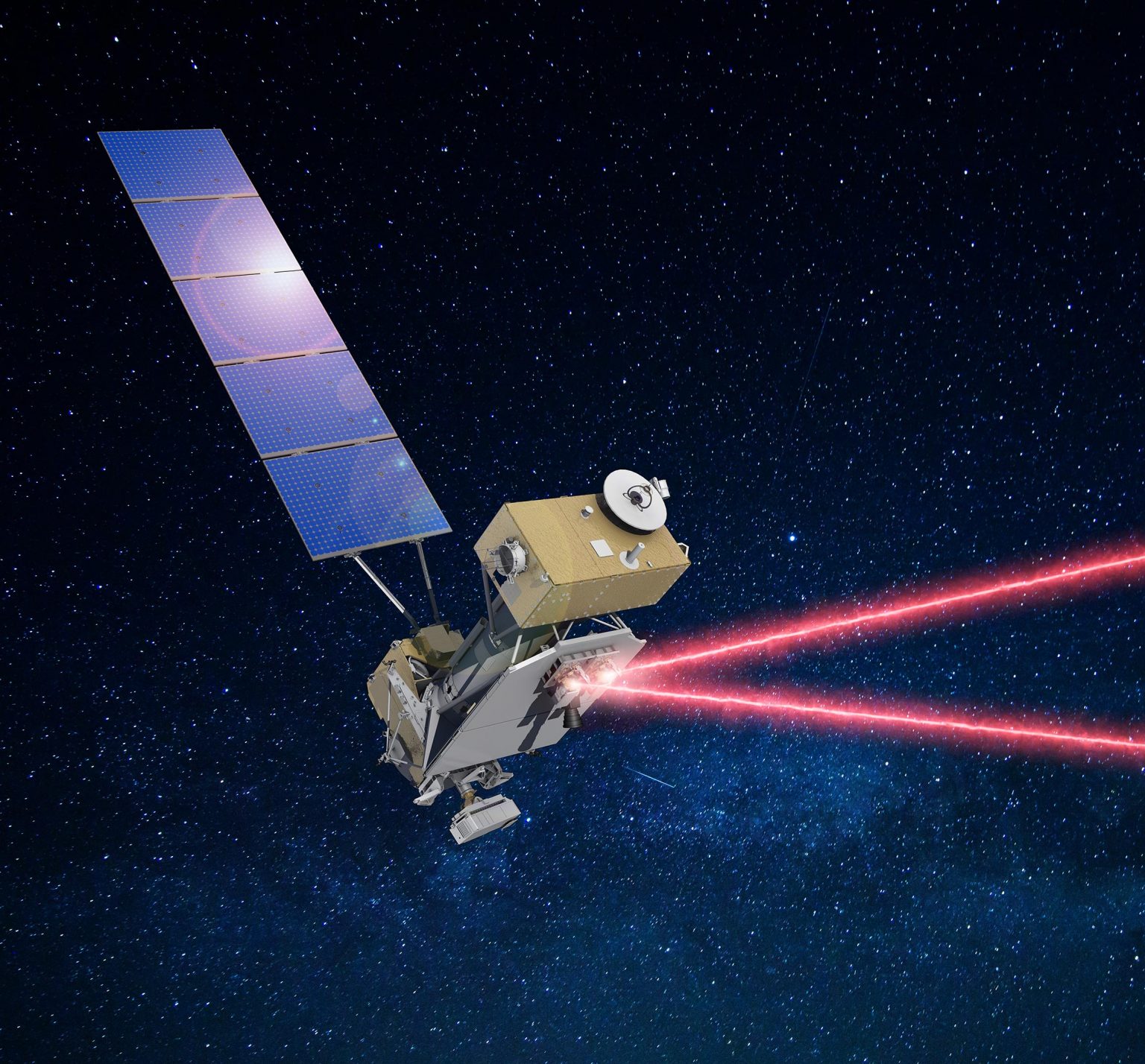
Illustration of the U.S. Department of Defense’s Space Test Program Satellite-6 (STPSat-6) with the Laser Communications Relay Demonstration (LCRD) payload communicating data over infrared links. Credit: NASA


Lasers are multipurpose tools.


Lasers can deliver energy to small-size drones. But the thing is that laser communication is making those systems more powerful than ever before. The same lasers that power can adjust can use as measurements, data transmission, and weapons. They can also use to point targets for the smart weapons or scan the target. 

The laser communication tools are offering secure and fast data communication. The system can offer the best protection against eavesdropping than ever before. Quantum communication by using lasers is easy to make.

In quantum communication data flow is cut into pieces. That is sent by using different frequencies at the same time. And then that data is connected to its entirety in the target position. 

The highly encoding systems can also send the data in a different order than they are used. And the target system would sort them to order what makes that data useful. But the laser communication tools can also use to measure things like gravitational waves. The laser rays would keep all the time contact with the opponent. 

And changes of the brightness are sending data. When we are thinking about the thing that laser rays are transmitting binary data that thing is easy to make. The laser can shut off for zero. But in AI-based systems, level zero can determine a certain level of brightness of the laser ray. So the system can determine that let's say about 1500 candela is the zero level. And all levels that are above it are one in binary number-based communication. 

For quantum protocol, the system must only determine the other levels. What separates the certain states of the qubit. The thing that makes this system difficult to make is that the air is absorbing light. 


x-x-x-x-x-x-x-x-x-x-x-x-x-x-x-x-x-x-x-x-x-x-x-x-x-x-x-x-x-x-x-x-x-x-x-x-x-x-x-x-x-x-x-x-x-x-x-x-x-x


If the laser system can calculate the absorption of the air. That makes long-distance qubit-based communication possible. 


The system requires two laser rays. The first one sends the transmission power and the points of state of the qubit to the receiver. Then the receiver measures how much the atmosphere absorbs the radiation. 


And it can use that data to download the data. That stored in the qubit. The second laser ray is the data transmitter, where a certain brightness or energy level means a certain level of the qubit. The receiving system must know those energy levels that it can start to download the data from the qubit at the right point. 


x-x-x-x-x-x-x-x-x-x-x-x-x-x-x-x-x-x-x-x-x-x-x-x-x-x-x-x-x-x-x-x-x-x-x-x-x-x-x-x-x-x-x-x-x-x-x-x-x-x


The knowledge of absorption is necessary for making long-distance qubit-based communication.

So the system must know exactly how much light energy or brightness is transferred to the air molecules. And without that data. The system cannot release the data that is stored in certain states of the qubit. 

There is the possibility to make a laser-based communication system that can send qubits in long distances. The system uses two laser rays. The other is sending the data of the transmitting power. And the points of the power, that separates the states. Then the receiving system can calculate the absorption. And that thing allows downloading data from certain states of the qubit. 

The thing in killer satellites is that most of them are planned to destroy other satellites. For those purposes, the satellites don´t need a megawatt-scale laser. The long-distance laser-communication tools are also good tools for ranging. But the same lasers can use as weapons. 

Or they can also search for chemicals from the air. Lasers can also scan objects. And the same lasers can use as weapons. If the lidar recognizes the target. The system must only increase the power of the system. And that will cut the target to pieces. 


https://scitechdaily.com/nasas-laser-communication-relay-demonstration-getting-space-data-to-the-ground-with-lasers/


https://scitechdaily.com/nasa-laser-communications-empowering-more-data-than-ever-before/


Image:https://scitechdaily.com/nasa-laser-communications-empowering-more-data-than-ever-before/

Saturday, December 4, 2021

Photons are the next-generation tools for next-generation quantum systems.

 Photons are the next-generation tools for next-generation quantum systems. 


Researchers at Stanford University made simpler structures for photon-based quantum computers. The system uses synthetic time dimensions and a single atom to manipulate the photons to operate as qubits. The structure of the quantum computer is introduced in the film above this text. The thing is that pulling the magnetic fields away from the chamber or track where photons travel would make the revolution for quantum computers. 

The problem with long-range photonic quantum data transmission is that every time photons would travel through the quantum field they are getting or delivering energy. And that affects data that is stored to them. When the energy level or brightness of the photon is changed. The quantum system cannot calculate the necessary states of the qubit. And that destroys data. 

Removing the quantum fields from the way of photons would remove also the outcoming effects and that thing makes it possible to create more accurate and safer data handling tools than ever before. 

The ability to stop photons is also making it possible to load data to them more accurately than ever before. The stopped photons that are trapped in photon crystals can stress by using electromagnetic radiation. And those photons can also use as data storage. 


Hypothetical free-photon lasers that use stopped photons could be the most accurate systems in the world. If that system is possible to create. The idea of free-photon lasers is that the photon cloud is stopped, and the electromagnetic stress will affect those stopped photons that are sending the wave movement. 

Stopped photons are also making it possible to create more powerful and more accurate lasers than ever before. The "photonic lasers" are creating the laser ray by using the cloud of stopped photons. Those photons will stress by using radiation, and they could work just like free-electron lasers. But the wavelength of those particles would be shorter than free-electron lasers. 

The reason for that is that. The wave movement comes out from standing photons. This kind of very accurate scanner that bases the technology where stopped photons would stress by using radiation can use to take images of the atoms and single electrons. The free-photon laser is theoretically possible to make. And the requirement for that system is that the stop of photon cloud is possible 

Sources:

https://scitechdaily.com/stanfords-simple-new-quantum-computer-design-photonic-computation-in-a-synthetic-time-dimension/


https://phys.org/news/2021-12-capture-photons-wall.html


Image: https://scitechdaily.com/stanfords-simple-new-quantum-computer-design-photonic-computation-in-a-synthetic-time-dimension/


Tuesday, November 13, 2018

Quantum compass and next generation navigation


https://gamesandtehories.blogspot.com/

Kimmo Huosionmaa

The vulnerabilities of GPS systems have been noticed, and that system has many weaknesses. The use of satellites makes it vulnerable to ASAT (Anti Satellite)-missiles, and another kind of weapons. That's why the military forces of the world are looking for the replacement for GPS. Even if the new systems, what bases the jumping frequencies are more immune to jamming than old systems, the replacement, what does not need satellites are now under the development.

Quantum compass might replace the GPS because it's immune to jamming systems. The major weaknesses of the GPS are the system uses satellites for giving the position of the point. And this is why GPS is quite easy to jam, and the other weaknesses are that the system cannot be used in underground or EMP-protected places.

Also, northern lights are disturbing that device, because they form ion layer in the top of the atmosphere. This means that the operators, who use GPS must find another way to locate themselves. The answer in submarines has been to use the Inertial navigation system, what connects the information of the speed of the thing, what uses that system, and the gyroscope meters the direction of the ship or aircraft.  In modern gyroscopes, the layer would lay in the magnetic field, and it is rotating like in the electric motors. The lasers would observe the direction and positioning of that magnetic plate, what reacts extreme sharply in any changes in direction of the system.

By using this information can the computer map the position, if the beginning point of the journey is known in the vehicle. This navigation system can map the entire route of the navigated thing. But this system requires the begin location for mapping, or it is useless. This is the problem with this system. Also, the problem is to make it enough small that person can carry it in the pocket, and the need of speed information makes this thing hard to use in ground vehicles.  Setting the beginning point of navigation is also difficult if the person jumps by using a parachute, where the beginning point is hard to locate.

The answer for the problem could be the very sharp magnetic compass, what bases technology, where the layer is floating in the magnetic field, and the multiple lasers are observing the position of that thing. The new kind of systems might be the combination, where is magnetic and gyro compass working together. Those systems might be very small and that would make them very light and effective.

The magnetic version of this compass works with a similar principle with normal magnetic compass, and the system calculates the place of the system by using the angle of the north pole for locating the system. The difference between the Inertial navigation system is that the plate must be in a stable position. There would be extremely thin magnet nail on it, and that makes possible to locate the magnetic north pole very sharply.

If those systems are based with nanotechnology, where the plates are extremely thin, and the width will be the only couple of micrometers and the size is smaller than coin or even the thumbtacks, the system would be extremely small. But of course, the operator needs more information and one is the knowledge about where the system is. So the operator must put the state or some coordinates, where he might be, that the computer can locate the person. This might be the next generation locating system.

Saturday, June 2, 2018

Fictional travel to Alpha Centauri by using laser boosted solar sail


NASA's solar sail
(Picture I)

Kimmo Huosionmaa

In this text, I would think about fictional space trip to Alpha Centauri by using solar sails, what are boosted with laser or microwave beams. The use of lasers with solar sails would give very much improvements to that system. The problems with laser-systems are that the material of the targeted spacecraft would be heated in extreme temperature, but when we are thinking about the use of lasers as the improve the thrust of that very large sail, we must think this problem practically.


Big size of solar sails would allow that the heat of the laser rays would circulate in the larger area, and that would help to decrease the heat, what powerful lasers would send to the target.  Those lasers, what would be used in that kind of program, might be kilometers long, and they might be stationed near the Earth. Making those kilometers long free-electron lasers or powerful masers is a quite simple thing.


There must send many small satellites to space, and then those satellites must be connected together. In this case, those satellites would be equipped with the particle accelerator, what goes thru each satellite and then those satellites would be made very powerful ray, that can be targeted to the solar sail. In this case, the solar sail would be covered with ice, and that ice is no need to be made by water. Then the laser-ray would steam that ice, and that would improve the speed and thrust of the solar sail. This is the good thing to pump the energy for the spacecraft, that would send to Alpha Centauri in some day in future.  The use of lasers or masers would allow using the power source of the spacecraft with smaller power, and that would increase the system lifetime.


When we are thinking about the structure of that solar sail, we might think, that there would be very many small units in this probe, and it would look like some jewels are connected with the same spiders net and the miniaturization and multiplication of that system would improve the solar sails ability to survive that mission. And when this solar sai comes near Alpha Centauri, it would turn sideways to the star, and then increase the layer, what would face the solar wind of that star.  This would help it to transfer it to the orbital trajectory of that star.


And then it could send thousands of pea-sized miniature probes to the planets of that star. That would seem like science fiction, but using miniaturized probes that kind of mission would be done, and the destruction of one particle, would not destroy all probes, and this hypothetical mission would be accomplished surer than with one single probe.  There is only one problem with that system, those massive lasers can be mentioned as the military technology. And that would cause the resistance against this kind of projects.

Sources:

https://www.youtube.com/watch?v=eiHDCOYgYsk

https://www.space.com/10678-nasa-solar-sail-photo-contest.html

Picture I

https://www.nasa.gov/sites/default/files/thumbnails/image/475897main_080421-earthsail_3023x2006.jpg

travellingintimeandspace.wordpress.com/2018/06/02/fictional-travel-to-alpha-centauri-by-using-laser-boosted-solar-sail/

Tuesday, May 29, 2018

Secret "antigravity" technology


Picture I


Kimmo Huosionmaa

The term "antigravity" means the actually silent way to raise the aircraft from the ground. In the real world, this term actually means that engineers try to repeal the magnetic field of the Earth, what would cause that the aircraft would rise above the Earth.  In some tests, there have been tested the magnets, what could push aircraft to airborne. They are actually one version of magnet catapults, but in this case, magnets would pull the aircraft straight to air, and in this system would be used the pulling effect between the same mark heads of the magnets.


And this kind of system is tested with levitating (Maglev) trains, where magnets push the train above the rail. Those magnetic rails would work the same way as gauss guns, where magnets will accelerate ammunition. Those magnets would be suitable to install in some warships or special runways, and they might help to send airplanes to air, with very heavy cargo. Also, pressurized air has been tested for giving airplanes capacity for lifting off with extra cargo, and in those systems, the pressurized air would blow under the body of aircraft by using compressors.


Sometimes there is mentioned the system called "Die Glocke" as one version of anti-gravity vehicle, and that is actually not true. This kind of systems are so-called "plasma-ion motors", and they are basically the same thing as ion motors. But they would use the greater density of ions. And those motors would work as the normal rocket or ion motors, but they are voiceless. Those motors would not use conventional combustion, and they can be used by giving electricity to that rocket with radio-masers. The same kind of systems are laser- and electric arc motors, what uses internal or external systems to make the warm air under the vehicle, and that heat would raise the aircraft to air.


Those internal lasers or radio systems could be targeted to carbon fiber stick, what would warm the air in the chamber under the craft. Or the electric arc can be made in the air, at the middle of the craft. In both versions, the problem of those systems is to create enough energy for raising that vehicle from the ground. The reason, why I took those laser and radio systems in this text at the same time,  is that both systems use electromagnetic radiation for making enough heat, that it can raise the craft in the air.


And sometimes there would be tested the airship, where the heat of the air can be made by using radio waves to make the warm air in this vehicles balloon.  So this kind of antigravity doesn't break laws of nature, and some of them are tested in public places, and below this text is one of those films, where the laser is used to give propulsion for small size test vehicle. And probably at someday, the full-scale system would fly across the earth.

Sources:

https://www.youtube.com/watch?v=LAdj6vpYppA&t=266s

https://www.youtube.com/results?search_query=gauss+railgun

https://writing.wikinut.com/img/1ux2cl6m5knxtgyx/Man-made-UFO-s

https://en.wikipedia.org/wiki/Maglev

Picture I

https://img.wikinut.com/img/1ux2cl6m5knxtgyx/jpeg/0/Man-made-UFO-s.jpeg

New autonomous task units are entering service.

"The deal will create much-needed competition for the Department of War acquisition process. (Representational image)" (Interestin...