Tuesday, January 9, 2024

Technical telepathy. And its risks.


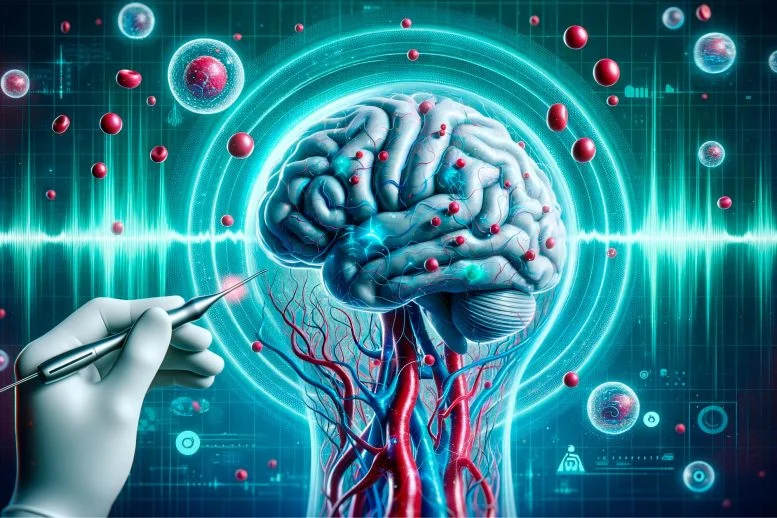
"A team from Duke University has created a speech prosthetic that translates brain signals into speech, aiding individuals with neurological disorders. While still slower than natural speech, the technology, backed by advanced brain sensors and ongoing research, shows promising potential for enhanced communication abilities. (Artist’s concept) Credit: SciTechDaily.com" (ScitechDaily.com/Not Science Fiction: Brain Implant May Enable Communication From Thoughts Alone)


The BCI (Brain-Computer Interface) allows one to communicate with thoughts. But those systems have their risks. Technical telepathy means the (usually) surgically implanted microchips that can offer an interface to other computers. And if hackers can hack that microchip, the results could be catastrophic. 

The AI and neuro- or brain implants allow people to communicate using thoughts. This kind of thing is also revolutionizing BCI systems. Those microchips can interact with other species' nervous systems. And they also can transmit information from the surveillance cameras. The idea is that those microchips send signals straight to the brain lobe, which is responsible for certain senses. 

In interactive brain implants, the AI decodes EEG to thoughts to text application that sends the data to command lines. The system can benefit the Wernicke-lobe that produces speech. In the case where a robot or computer sends data to a certain brain lobe, that thing allows the system to create virtual memories. Because that kind of system passes normal neural tracks it causes the effect that a person cannot separate real memories from the memories that this system transmitted to the brain. 

They are allowed to use cell phones using thoughts. This kind of system can be the base for the next-generation technical PSI or remote view. Neuroimplats are impressive tools that can control robotic exobodies and other robots. The fact is that the neuro-implanted person can also control dogs and bugs that are under microchip control using their brainwaves. Researchers make work with BCI systems that don't require surgical operations. Those systems are so easy to wear as hats. 

The misuse of the BCI is possible. The system can create false memories and control people's thoughts. This thing should be mentioned when researchers are working with interactive BCI systems. Surgically implanted chips are dangerous if somebody hacks them. And this is one reason why this kind of research must be public. 

The AI and the BCI systems that decode human thoughts can be terrifying tools in the wrong hands. The system can used to control people. And in some very scary visions, the interactive BCI system will read all thoughts. That humans have. And then if it sees marks of rebellion, the system stimulates the brain areas that control pain. These kinds of systems are scary and effective things. 

AI is one of the systems that are concerned with marketing. Things like our knowledge of subconsciousness allow the AI to create material that affects, especially subconsciousness. This is the reason, why the Internet should filter things like subliminal effects from marketing materials. Also, people who work with the BCI should be careful because if the microchip that is used to communicate with computers is hacked, that can cause catastrophic situations. 


https://scitechdaily.com/not-science-fiction-brain-implant-may-enable-communication-from-thoughts-alone/


https://scitechdaily.com/the-dark-side-of-ai-how-our-subconscious-is-at-risk/


https://learningmachines9.wordpress.com/58-2/


Sunday, January 7, 2024

The supercrystals are making the new advanced materials and intelligent clothes possible. But they can revolutionize chemistry.

The main problem with intelligent clothes and materials is energy. Solar panels and nano-size generators can give energy to the system. Those systems must be small enough. That they can be effective and comfortable. 

The amorphous silicon or silicon carbide is 10X stronger than Kevlar. That thing can used in the next-generation clothes. The amorphous silicon can form the layer above the plates. And that makes it possible to create new types of highly advanced armor that cover the entire body. 

When we think about the extra-hard crystals they are impressive. But if microprocessors control the structure. That can form small robots. That thing makes them more impressive than ever before. 


"Professor Emiliano Cortés, at LMU, is revolutionizing solar energy capture through nanotechnology. By developing plasmonic nanostructures, his team creates materials that concentrate solar energy more efficiently. Their latest breakthrough, a supercrystal that produces hydrogen from formic acid using sunlight, holds the world record in its field. Credit: SciTechDaily.com" (ScitechDaily.com/Harnessing Sunlight Like Never Before: The Supercrystal Breakthrough)


"Scientists have developed amorphous silicon carbide, a strong and scalable material with potential uses in microchip sensors, solar cells, and space exploration. This breakthrough promises significant advancements in material science and microchip technology. An artist’s impression of amorphous silicon carbide n anostrings testing to its limit tensile strength. Credit: Science Brush" (ScitechDaily.com/10x Stronger Than Kevlar: Amorphous Silicon Carbide Could Revolutionize Material Science) Those silicon carbides can connect using thin and flexible carbon fibers. 

The amorphous crystals can also be used in electrochemistry. In electrochemistry, those super crystals can used as magic sticks that can push and pull ions and anions on the layer. The system can make a revolution in the processes. That electric system makes complicated structures like in medicine creation.  The small size makes it possible to control those electric shocks with very high accuracy. 


"University of Chicago scientists have developed a way to improve chemical reactions in drug manufacturing using electricity. This breakthrough in electrochemistry, enhancing efficiency and sustainability, opens new avenues in green chemical production. Credit: SciTechDaily.com"  (ScitechDaily.com/The Shock Factor: Electricity’s Revolutionary Impact on Chemical Synthesis) 


The highly accurate electric shocks allow the system can control the electron shell position around the atom. The shock system can adjust the touching points of atoms and molecules. 

This type of system can connected with photoacoustic systems. In a photoacoustic system laser ray creates electricity to the structure. That electricity makes the structure oscillate and it sends pressure waves. The system can be two internal fullerene tubes where the outer layer is covered with a 2D silicone structure. The photoelectric phenomenon makes this system oscillate. And the magic stick can move neutral atoms or molecules over the layer. 

The photoacoustic systems can used as a small-size SONAR system, that can take images of the nervous system. The photoacoustic systems can also take similar images of small fibers. This type of system can also used to create nano-bubbles in blood vessels. That takes nutrients for the cancer cells. The photoacoustic system can use human blood cells that it turns to rotate vertically. When the rotating speed of those blood cells is high enough they create a phenomena, called supercavitation.  

Those rotating blood cells make low pressure behind those rotating layers. And that thing forms the microbubbles. The microbubbles can also be used to replace traditional antibiotics. The bacteria eats some small plastic plates, Then the acoustic system starts flipping them. That thing can fill bacteria with microbubbles that can be effective against antibiotic-resistant bacteria. 


Samurai armour.


The amorphous silicon can cover small titanium plates. Or it can form structures that are known for gold necklaces. That makes it possible to create a cube-looking amorphous silicone structure that makes a strong and flexible structure. Those cube's size could be less than a millimeter. Miniature screens can also used for those kinds of systems. 


In intelligent solutions, there may be small screens outside those plates. This makes the invisibility cloak look like a samurai armor. Over those plates can also put the carbonite crystal. That is used in spacecraft glasses. 

If there are small cameras around the suite those screens can make the suit invisible. Those cameras can also send information to the VR (Virtual Reality) or AR (Augmented Reality). The system can tell the user where is other people. And where the threat is coming. This same system can used in helicopters and aircraft. 

The silicone cubes may have small nano-size generators. When the structure moves that generator produces electricity. The silicone cube may be a microchip. The silicone crystals can also covered with a 2D silicone structure. That structure can act as solar panels. And this thing makes intelligent solutions possible. 

The miniature robot cubes or robot bricks can form the non-organic version of the neurocreatures. In that kind of artificial neurocreature, the microchips act as neurons. And the system can connect the processor's power into one entirety. 

In one solution those crystals can be robots that can create clothes or close leaks in tubes, and aircraft and ship's bodies. The nanorobots are very suitable tools for many missions. The thing is that the nanomachines can act like automatized Lego bricks. They can create structures automatically. 


https://scitechdaily.com/10x-stronger-than-kevlar-amorphous-silicon-carbide-could-revolutionize-material-science/


https://scitechdaily.com/advanced-nerve-visualization-with-photoacoustic-imaging/


https://scitechdaily.com/harnessing-sunlight-like-never-before-the-supercrystal-breakthrough/


https://scitechdaily.com/the-shock-factor-electricitys-revolutionary-impact-on-chemical-synthesis/


https://learningmachines9.wordpress.com/the-supercrystals-are-making-the-new-advanced-materials-and-intelligent-clothes-possible-but-they-can-revolutionize-chemistry/

Friday, January 5, 2024

Harvard's futuristic wearable soft robot is an interesting tool.

Harvard's futuristic wearable soft robot is an interesting tool. 


"Innovative research has developed a soft robotic garment that significantly reduces freezing episodes in Parkinson’s disease patients, offering a promising new approach to treatment and understanding of the disease. (Artist’s concept.) Credit: SciTechDaily.com." (ScitechDaily.com/Strides of Innovation: Soft Robotic Exosuit Improves Walking for People With Parkinson’s Disease)   

"The robotic garment (above), worn around the hips and thighs, gives a gentle push to the hips as the leg swings, helping the patient achieve a longer stride. Credit: Walsh Biodesign Lab/Harvard SEAS" (ScitechDaily.com/Strides of Innovation: Soft Robotic Exosuit Improves Walking for People With Parkinson’s Disease)

The new soft robot suit can give major help to Parkinson's patients. But it can make many new things. The Harvard developers developed a futuristic soft robot suite for Parkinson patient's that can correct their "freezing" moments. That soft robot suite can interact with muscles and nerves. The computer system sees when the freezing moment comes. And the robot suite can react to that thing. 

That robot suite can also be used by people who have brain injuries. Or bad balance. The robot suite sensors can see when a person falls. And then it can make counter-movement. That counter movement can done by using muscle stimulation. Or the system can use the tools that are connected to the robot suit. 

When a person loses balance or goes unconscious the robot suit can save a person from injuries and even dial the emergency number. Then the AI tells what is the problem. The robot suite can also send information on the body functions to the ambulance crew that comes to the place. The number and position of sensors determine what data that kind of system can collect. 

"Researchers at SEAS and the BU’s Sargent College of Health & Rehabilitation Sciences used a soft, wearable robot to help a person living with Parkinson’s walk without freezing. The robotic garment, worn around the hips and thighs, gives a gentle push to the hips as the leg swings, helping the patient achieve a longer stride. The research demonstrates the potential of soft robotics to treat a potentially dangerous symptom of Parkinson’s disease and could allow people living with the disease to regain their mobility and independence. Credit: Harvard SEAS" (ScitechDaily.com/Strides of Innovation: Soft Robotic Exosuit Improves Walking for People With Parkinson’s Disease)


The thing is that this kind of system can also be suitable in space and other extreme places. In the deep sea, those robots can used to save scuba divers in the case of nitrogen narcosis. Another thing is that those robots or their sensors can also used to control the exobodies. Exobody is the robot that the operator controls in augmented reality. The system can use the EEG curves to control the human-looking robot's actions. Or the system can use sensors that connect to angles. 

Those sensors are used to make human-looking animated cartoons. The same technology can used to control robots. The operator can control the "exobody" by using laser scanners and cameras that are in circles around the operator. Then the operator must only make movements and the system transfers them to the exobody. 

An ability to take the body under control makes that kind of operation more flexible and safe than ever before. The robot suit can cooperate with the space suit. And when we think about wearable robot-space suits that thing can make it possible to create new types of tools to handle things like nuclear accidents. 

Especially the heavy space suit called the "white suit" is very resistant to radiation. That kind of space suit robots can used for cleaning operations in areas, where radioactive fallout is at a dangerous level. The white suit is developed to protect its users against cosmic radiation and high-speed electrons and helium nuclei. The hollow suite-looking robot can act as a rescue capsule. The system can take humans inside it, and then travel out from the danger zone. 

https://scitechdaily.com/strides-of-innovation-soft-robotic-exosuit-improves-walking-for-people-with-parkinsons-disease/

Colloid thrusters as plasma-stealth and electromagnetic compressor systems. For next-generation aviation.

    Colloid thrusters as plasma-stealth and electromagnetic compressor systems. For next-generation aviation. 


The "electrospray" can work also as a stealth system.


The ion engines can give poor thrust. But those kinds of systems can used to make the ion layer between radar and aircraft or ships. The ion engine can also used to create an ion trail behind the drones. That is flying between the aircraft and the ground. 

The "electrospray" can be a useful tool in combination with technology where thin ionization is used to create an ion layer over aircraft and ship hulls. That kind of system can make the next-generation plasma-stealth systems possible. 

In those plasma-stealth systems, the ion layer pulls radar impulses in ions or anions. And that thing denies the radar echo. In some other models, the ion system makes the plasma cloud that acts like a "chaff dispenser" and makes the false targets for radar-homing missiles. In some other versions, the system loads opposite polar electricity to the target. When the target is loaded with minus electric load, and ions are delivered to the air, that negative electricity pulls those ions like protons or nitrogen ions to that target. 

There are two ways to make the electrospray that denies radar see targets. The first one is that. The aircraft or ship covers its shell with an ion layer. The other system bases that fast-flying drones or manned aircraft will pull ionic trails behind them. That ion or anion trail will deny the radar impulses travel through it. 

SR-72


MQ-28 Ghost Bat

From Above: Lockheed SR-27 hypersonic testbed concept. And Boeing MQ-28 Ghost Bat. This type of drone can pull ion trail between the aircraft and radars. 

Colloid thrusters as plasma-stealth and electromagnetic compressor systems. For next-generation aviation. 


"Simple ramjet operation, with Mach numbers of flow shown" (Wikipedia/Ramjet)


"Diagram of principle of operation of a scramjet engine" (Wikipedia/scramjet)


The problem with those systems is the lack of compressors. It's hard to make a mechanical compressor that accelerates the airflow to Mach 7. If the compressor rotates too fast it makes a vacuum around it. And that makes it impossible to put that compressor at the front of the ramjet or scramjet engine. That vacuum pulls exhaust gas forward and that engine stops to give thrust. And the centripetal force can also break a fast-rotating turbine. 

In some visions, the compressor is behind the Ramjet. And that vacuum that forms around the fast-rotating turbine wheel behind the exhaust tube pulls airflow through the engine. Another thing is to use an electromagnetic compressor that pulls ion flow through the ramjet or scramjet engine. 

That means the aircraft must reach Mach 1 so that the ramjet engine can start to operate. The scramjet requires about speed of Mach 7. That it can ignite fuel that is hydrogen. If the system uses magnetic accelerators and ions it could accelerate airflow to the needed speed while the aircraft is in a stable position. 


The colloid thruster could be a suitable tool for hypersonic aircraft. The system can ionize gas for magnetic compressors. 


The problem with the ramjet and scramjet engines is that they have no compressors. The mechanical compressor that can push air to the super-, and hypersonic engine with speeds of Mach 5+ is hard to make. One solution that can respond to that problem is the electromagnetic compressor. The electrospray system or colloid thruster can used as an auxiliary ionizers for ion compressors. The ion compressor system pulls ions like oxygen ions into the jet engines. 

That kind of system is suitable for ramjet and scramjet engines. The ionization makes it possible for engineers to create a system that can drive gas flow in supersonic or hypersonic engines. The system pulls ionized gas through the engine. And that gas flow travels with speed. That is high enough that the engine can ignite the hydrogen. That is suitable fuel for super- and hypersonic systems. The magnetic compressor uses magnetic fields to create the gas flow that allows it to ignite the fuel. 

The electrospray system also can make the ions for the electric jet engines. In electric jet engines, the combustion is replaced by using an electric arc. The system can use the magnetic compressor to collect ionized gas for the electric jet engine. Then the system makes an expansion for that gas by using an electric arc. That kind of engine system are very powerful tool for the next generation of very fast aircraft.


https://www.boeing.com/defense/MQ-28/index.page


https://forcaaerea.com.br/raaf-nomeia-como-mq-28a-ghost-bat-o-loyal-wingman/


https://interestingengineering.com/innovation/new-electric-jet-engine-actually-works-inside-the-atmosphere


https://militaryarmamentshub.com/admin/inside-the-top-secret-race-for-americas-first-hypersonic-aircraft/


https://scitechdaily.com/electrospray-technology-palm-sized-propulsion-for-future-space-missions/ 


https://en.wikipedia.org/wiki/Boeing_MQ-28_Ghost_Bat


https://en.wikipedia.org/wiki/Colloid_thruster


https://en.wikipedia.org/wiki/Lockheed_Martin_SR-72


https://en.wikipedia.org/wiki/Ramjet


https://en.wikipedia.org/wiki/Scramjet


Monday, January 1, 2024

Chiral magnets are revolutionizing AI.

  Chiral magnets are revolutionizing AI. 


Chirality means that another molecule is the first molecule's mirror molecule. "An object or a system is chiral if it is distinguishable from its mirror image; that is, it cannot be superimposed onto it. Conversely, a mirror image of an achiral object, such as a sphere, cannot be distinguished from the object. A chiral object and its mirror image are called enantiomorphs (Greek, "opposite forms"). or, when referring to molecules, enantiomers. A non-chiral object is called achiral (sometimes also amphichiral) and can be superposed on its mirror image." (Wikipedia/Chirality)

Long-time researchers thought that cerebral hemispheres are like mirrors to each other. Or actually, they thought that information travels in mirror form in the cerebral hemispheres. So the cerebral hemispheres are chiral to each other.        

"Researchers have advanced brain-inspired computing using chiral magnets, significantly reducing energy use in machine-learning tasks. The research marks progress towards more sustainable and adaptable computing technologies. An artistic representation of connected magnetic skyrmions as a computational medium for brain-inspired, reservoir computing. Credit: Dr. Oscar Lee" (ScitechDaily.com/Revolutionizing AI: Chiral Magnets Pave the Way for Energy-Efficient Brain-Like Computing)


            "Two enantiomers of a generic amino acid that is chiral" (Wikipedia/Chirality)


The chiral magnets allow to transfer of information in chiral form to the AI system that consists of two or three computers. The idea is that this type of "iron AI" acts like the human brain. Two main computers are like the cerebrum and the third computer is like the cerebellum. If those main components get different solutions the third part of the system selects which one looks better. 

This type of AI can use the program-iron (physical machine) based systems that make it very effective. There are three internal layers in the system whose mission is to act like the human brain. The center layer is the diencephalon whose mission is to select which part of the data the system stores in its memory. And which data it crushes. The RAM acts as short-term memory and the hard disks are the long-term memory.         

The independently operating AI that controls robots on the street acts a little bit like ChatGPT and other language models. The difference between language models is that the images and other data that the sensor transmits to the computer must activate the code or generate the code that the robot's computerized systems require. In ChatGPT controlled robots the speech-to-text application is lined with a language model. Then the user gives orders to the robot. 


********************************************************

The ChatGPT-type language models are also suitable for controlling AI-based systems. The databases that the language model requires can written using spoken language. When the system recognizes something that fits into a certain database, that system connects itself to that tablet. Then it dumps that text into the language model that creates the operational code. 

The language models are complicated tools that require lots of calculation power. That means the system can run on supercomputers in computer centers. The system can control robot using the mobile data solutions. 

******************************************************


The AI generates the necessary code that controls microchips in the robot's body. In non-centralized models, every servo engine has its microchip. That controls its operations. The independently operating robots require the ability to generate code or connect themselves to the right database where is the operational code. 

This type of system can benefit ChatGPT. The orders that are meant for those situations are required. Are written in spoken language. Then the system dumps that text to the language model. Then the language model can create the control code. That is suitable for the situation. 

The simplest way to make the system operate in strange situations is to use a human operator who tells the computer and AI what it must do. It's impossible to predict all possible situations where robots can be involved when they operate on the street. 

Strange, or non-predicted situations are always problematic for machines. Those systems learn like humans. They interconnect databases with each other. When the system's sensors see something they drive that thing to RAM. Then the system will connect some databases with those memory blocks. 


https://scitechdaily.com/revolutionizing-ai-chiral-magnets-pave-the-way-for-energy-efficient-brain-like-computing/


https://en.wikipedia.org/wiki/Chirality


Retroposons and AI are excellent tools for medical work and genetic mapping.

   Retroposons and AI are excellent tools for medical work and genetic mapping. 


The AI works with genetics and medicals. 


The AI, or "co-scientist" is the ultimate tool for medical research. But the same AI can make many other things like finding certain DNA sequences. The AI can search billions of DNA samples finding anomalies. And then the AI can search the medical data of people.

Who has certain anomalies in the DNA? There is also the possibility that the mice have certain DNA sequences that act similarly to human DNA. So if the system injects manipulated DNA where is that anomaly in the mice, that can tell how the genome models behavior of the mice. 

Retroposons and retrotransposons are a little bit different things.  "Retrotransposons (also called Class I transposable elements or transposons via RNA intermediates) are a type of genetic component that copy and paste themselves into different genomic locations (transposon) by converting RNA back into DNA through the reverse transcription process using an RNA transposition intermediate." (Wikipedia/Retrotransposon)

"In contrast to retrotransposons, retroposons never encode reverse transcriptase (RT). Therefore, they are non-autonomous elements with regard to transposition activity (as opposed to transposons). " (Wikipedia/Retroposon)

"Non-long terminal repeat (LTR) retrotransposons such as the human LINE1 elements are sometimes falsely referred to as retroposons. However, this depends on the author. For example, Howard Temin published the following definition: Retroposons encode RT but are devoid of long terminal repeats (LTRs), for example long interspersed elements (LINEs)". (Wikipedia/Retroposon)

"Retrotransposons also feature LTRs and retroviruses, in addition, are packaged as viral particles (virions). Retrosequences are non-autonomous elements devoid of RT. They are retroposed with the aid of the machinery of autonomous elements, such as LINEs; examples are short interspersed nuclear elements (SINEs) or mRNA-derived retro(pseudo)genes". (Wikipedia/Retroposon)


"Research from Duke University overturns previous beliefs about retrotransposons, showing that these DNA sequences actively use cellular mechanisms to form circular shapes and replicate. This finding, which has implications for understanding genetic evolution and diseases, challenges the long-held view that circular DNA is merely an accidental by-product. Credit: SciTechDaily.com" (ScitechDaily.com/Genetic Hijackers: How Sneaky Retrotransposons Are Rewriting the DNA Playbook)


"Ring-like circular DNA has been seen copying itself by borrowing some of the cell’s machinery, just as a virus does. Credit: Fu Yang, ZZ Lab at Duke University" (ScitechDaily.com/Genetic Hijackers: How Sneaky Retrotransposons Are Rewriting the DNA Playbook)


"Phylogenetic tree of marsupials derived from retroposon data" (Wikipedia/Retroposon)


The human DNA molecule can involve three billion base pairs. The retroposon can transport DNA sequences to the wrong place. Or the DNA sequence. That is in a different place in DNA. Can make the cultivar look different. Than other cultivars in the same phylogenetic tree. 

But the other interesting thing in the DNA is the so-called "retroposons". Retroposon is circular-shaped DNA that transports genomes. Retroposons are DNA sequences that can travel in the genome. The circular DNA plays a vital role in cell replication. The circular DNA plasmids can also control the cell's machinery. 

That thing is also an interesting tool. Artificial retroposons are things that can transport virus resistance to the cells. And the same thing can act as an artificial retrovirus. If the system can create artificial retroposon the system can reprogram cell factories or cell organelles to produce things like antibodies. When retroposon is transported through the cell organelle, the cell organelle can return to its normal duties. 


https://scitechdaily.com/decoding-the-black-box-of-ai-scientists-uncover-unexpected-results/


https://en.wikipedia.org/wiki/LINE1


https://en.wikipedia.org/wiki/Long_interspersed_nuclear_element


https://en.wikipedia.org/wiki/Long_terminal_repeat


https://en.wikipedia.org/wiki/Phylogenetic_tree


https://en.wikipedia.org/wiki/Pseudogene


https://en.wikipedia.org/wiki/Retroposon


https://en.wikipedia.org/wiki/Reverse_transcriptase


https://en.wikipedia.org/wiki/Retrotransposon


https://en.wikipedia.org/wiki/Short_interspersed_nuclear_element


https://en.wikipedia.org/wiki/Transposable_element

Sunday, December 31, 2023

Private space companies also make moon landers.

 Private space companies also make moon landers. 


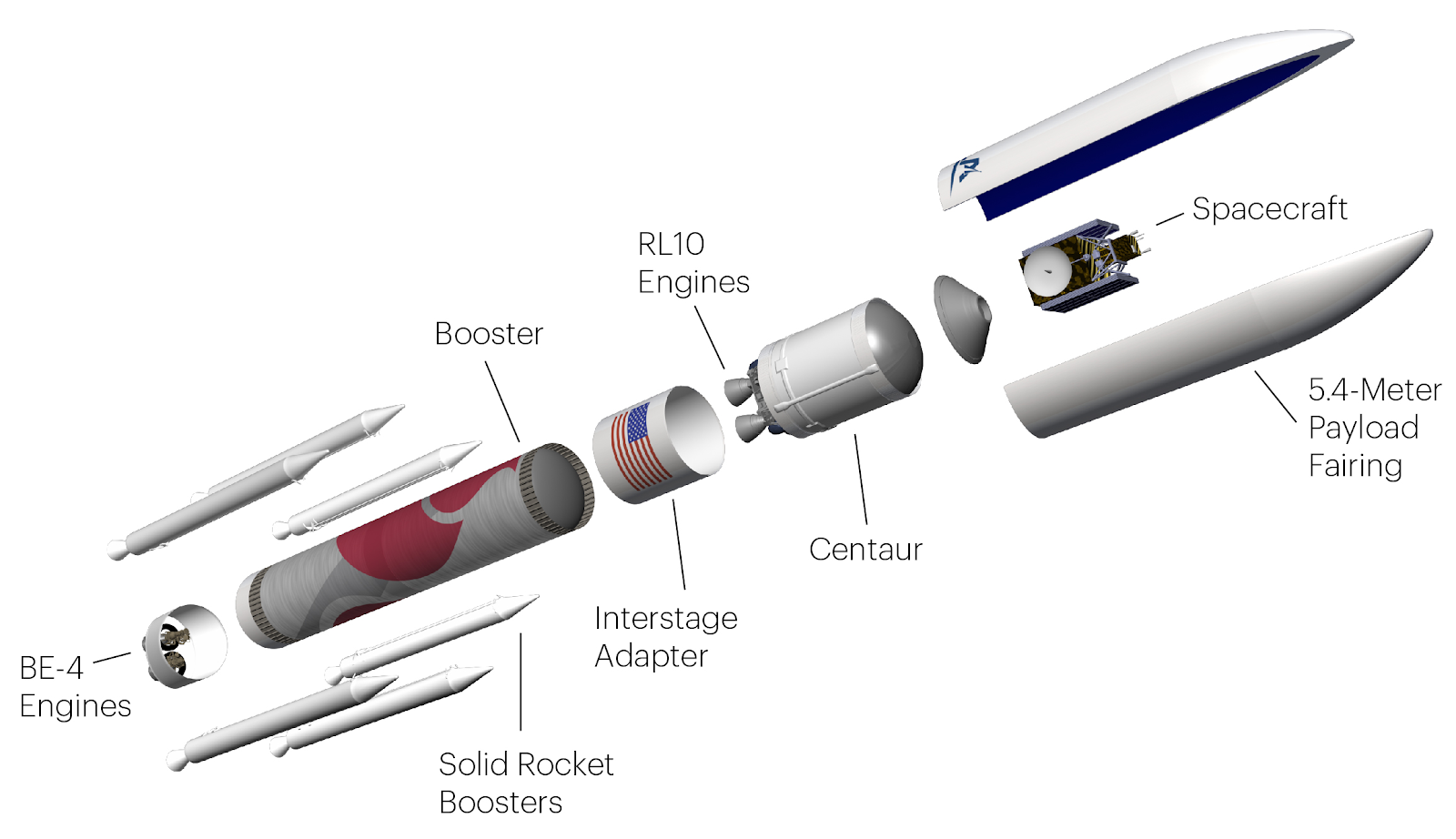
Private Peregrine moon lander stacked in ULA (United Launch Alliance) Vulcan rocket. And it's ready for lift-off on January 8. 

Peregrine moon-lander looks like any other moon lander. The difference is that Peregrine is a private project. That is a good example of flexible innovations. A private corporation makes the moon-lander. That can take samples from the Moon's surface. Private space corporations are rising actors in space research in technical and scientific ways. 

Private corporations offer flexible platforms that can operate with things like space stations and other similar things. Private space industries are not only communication satellites. The private space industry also wants to benefit from low- and zero-gravity conditions for laboratories. 

And remote-controlled miniature shuttles can also operate as manufacturing platforms for complicated molecules and nanomechanics. This is one of the reasons why civilians are also interested in Scramjet engines and hypersonic flight. 

The air-breathing scramjets offer the possibility to make a cheap and effective launch platform for miniature shuttles that can used as remote-controlled laboratories. When those systems finish their operations. They can return the merchandise to the ground. That is one reason why those miniature robot shuttles are under development. 


"The Peregrine prior to being loaded atop the ULA Vulcan rocket (Image credit: Astrobotic" (Space.com/Private Peregrine moon lander is stacked on ULA Vulcan rocket ahead of Jan. 8 launch)


ULA:s Vulcan-Centaur rocket. 


"Artist's illustration of ispace's Series 2 robotic lander on the surface of the moon (Image credit: ispace)" (Space.com/Japan's ispace shows off a tiny moon lander for its 2nd moon mission in 2024)


Another system that travels to the Moon is the Japanese miniature lander. The Japanese "ispace" corporation introduces its miniature moon-lander along with miniature rovers. The miniature space systems allow to creation of new models for moon and planetary missions. 

A large number of AI-controlled miniature landers and drone swarms can used as the non-centralized solution for space missions. The system can be based on miniature actors. They have different types of sensor packs. Those systems can connect their abilities in their entirety. And that thing is the base of drone swarms. 

A large number of simple and cheap systems can form a drone swarm that acts like one complicated system. The difference between those drone swarms and one complicated system is that. Destruction of one drone doesn't destroy the entire swarm. 

Another remarkable thing is that miniaturized technology makes it possible also small robots can carry multiple sensors and effective computers. That allows them to run complicated AI algorithms. That allows them to make versatile operations. 

That base is in non-centralized calculations and the ability to connect their data into one entirety. Traditional space systems are large and complicated systems. The smaller but larger group of different probes makes it possible that even if one participant's mission fails. The mission can continue. Also, a swarm of landers or drones can cover a larger area. Then one single lander. In some visions, similar helicopter technology that operates on Mars can be used with those landers. 

Those systems can equipped with Kamov-type opposite rotating rotors, and they can carry the drone that is equipped with seismic sensors and sample-taking systems. Things like miniature magnetometers and laser spectrometers make those systems flexible and versatile tools. 


https://www.space.com/peregrine-moon-lander-stacked-ula-vulcan-rocket

https://www.space.com/japan-ispace-moon-lander-2nd-mission

https://www.ulalaunch.com/rockets/vulcan-centaur

https://en.wikipedia.org/wiki/Ispace_(Japanese_company)


Metamaterials: the key for making self-assembly layers and machines.

  Metamaterials: the key for making self-assembly layers and machines.


Metamaterials especially metamaterials that can return to their original shape after damage are interesting and revolutionizing tools. Most of those materials are in the polymerase chain reactions. One version. How to make this type of self-assembling material is to connect the polymer with the metal bites. In the simplest model, the self-chaining polymer makes a platform. 

The system puts the metal bites over that network. Then it melts metals over the polymer network. In some other models at the edge of the metal is the polymer. When those metal alloy plates. Or, as an example metal-silicone compounds will take close to each other. The polymers make touch with each other. In some visions, this kind of thing can made using DNA-controlled crystals. That thing can be an artificial silicone-based lifeform. 

*************************************************************


"A 3D-printed Möbius strip (left) and odd-numbered metaring (right). These are both non-orientable objects that will necessarily have a point along the ring that does not deform. Credit: Xiaofei Guo" (ScitechDaily.com/Unlocking the Secrets of Mechanical Memory in Metamaterials)


"A 3D-printed Möbius strip (top) and two odd-numbered metarings (middle and bottom). These are all non-orientable objects that will necessarily have a point along the ring that does not deform. Credit: Xiaofei Guo". (ScitechDaily.com/Unlocking the Secrets of Mechanical Memory in Metamaterials)

*************************************************************

In some models, genetically engineered silicon algae can make complete silicone structures. And then the system can melt metal alloy over that structure. The silicone algae are tiny algae with a silicone shell. 

It's possible. That genetically engineered bacteria can spin the silicone network that is like silicone canvas. That is a good platform for metal structures. 

If we have metamaterial, that can return to its original shape after damage. That kind of thing makes SciFi movies true. This kind of material is introduced in Stephen King's novel "Christie". In some visions, the holes in metamaterial can fixed by putting the plate in the hole. 

And then that material simply melts itself into the hole. In some visions, damage makes small wires or "hair" in that kind of metamaterials. Then the repairment system just puts the repairment bite at that point. And then it conducts electricity in that thing. That makes those bites melt into one piece. But if that process is possible to make without outcoming effects. That makes those metamaterials more effective. 

Self-assembling metamaterials require some kind of mechanical memory, that controls the movements of those layers. Benefiting those things requires complete knowledge of mechanical memory. When researchers find how that thing works they can make many new things. And one of them is self-repairing structures. 

Metamaterials are new things in robotics. The system allows to make the new type of complicated structures. And those kinds of things are the new types of tools in space and other places. There are needed ultimate strength and flexibility.


https://scitechdaily.com/unlocking-the-secrets-of-mechanical-memory-in-metamaterials/

Saturday, December 30, 2023

Space X's Falcon Heavy carried a mysterious X37B shuttle to the orbiter.

 Space X's Falcon Heavy carried a mysterious X37B shuttle to the orbiter. 


When we see the timing of this flight, we must ask one question. Does the X37B robot shuttle flight have a connection with the Chinese Shenlong Shuttle's flight? Both of those shuttles are quite similar. So that can mean that Shenlong and X37B might have similar missions.  The term "Shenlong" means "God dragon" or "Divine dragon" in Chinese mythology. 

And that supports the theory that Shenlong's mission is also to collect antimatter from space. And Shenlong is also suitable for anti-satellite and anti-ballistic missile operations, as well as, military intelligence duties. Because X37B and Shenlong are both highly secretive, their main operator could be the military. 


X37B

The thing is this. Falcon Heavy rocket rises that X37B shuttle to a very high altitude, where it can take images and affect another satellite. Very good ability to change trajectory makes those systems suitable satellite killers that target GPS and other important satellites that are needed for combat support.

The miniature robot shuttles are tools that the military needs for some unique missions In some visions those shuttles are the next-generation multimissio platforms that can even act as nuclear weapon carriers. Miniature shuttles can take hydrogen bombs in their cargo bay and act as super-kamikaze drones. 

Robot shuttles are multimission tools. They can operate in space for a very long time in a mode. Where their systems only store information. That means those shuttles can hover in space and record data on their hard disks. Then that shuttle can return to base, where that data will download to the servers for analysis. 

That makes. This kind of system useful tool for ELINT (Electronic Intelligence) missions. The fact is that there are lots of hidden things in those robot shuttles. Their only operator is the military, and that means their scientific missions must have some kind of connection with military work. And in most scenarios, those scientific tests serve the weapon research. 


https://www.space.com/spacex-falcon-heavy-x-37b-space-plane-launch-success


https://en.wikipedia.org/wiki/Boeing_X-37


https://en.wikipedia.org/wiki/Shenlong_(spacecraft)


Shenlong in Chinese mythology

https://en.wikipedia.org/wiki/Shenlong   

Friday, December 29, 2023

The groundbreaking advance in nanotechnology.

   The groundbreaking advance in nanotechnology. 


Researchers connect nanoparticle quasicrystals using DNA. This kind of technology makes us rethink DNA and its ability to operate as a chemical computer program that controls nanomachine and other complex structure's self-assembly. The researchers took ideas for that kind of from hypothetical silicon-based lifeforms. 

The AI that connects laboratories in its entirety will revolutionize chemistry and nanomachine research. The name of that system is "AI-based co-scientist". The idea is that AI makes practical work in the laboratory. That is usually left for ungraduated students. Those mechanical works offered unwanted people like industrial spies to slip into the laboratory. 

********************************************************************


"The simulation shows the decahedra packing together into a quasicrystalline structure on the left, with a diagram of the structure on the right. Credit: Glotzer group, University of Michigan." (ScitechDaily.com/Revolution in Material Science: Scientists Construct Nanoparticle Quasicrystal With DNA)


"Coscientist, an AI developed by Carnegie Mellon University, has autonomously mastered and executed complex Nobel Prize-winning chemical reactions, demonstrating significant potential in enhancing scientific discovery and experimental precision. Its ability to control laboratory robotics marks a major leap in AI-assisted research. Credit: SciTechDaily.com" (ScitechDaily.com/From Code to Chemistry: Coscientist, the AI System Mastering Nobel Prize-Winning Reactions)

*******************************************************************

This experiment shows that AI-based laboratory systems can create DNA. That can make structures act like cells. The DNA can control crystal and structure self-assembly. And that thing makes new types of complicated physical systems possible. The DNA-controlled physical machine self-assembly will make the next-generation nanotechnology possible. Nanotechnology makes possible the mass product of complicated nanostructures and reprogramming bacteria. 

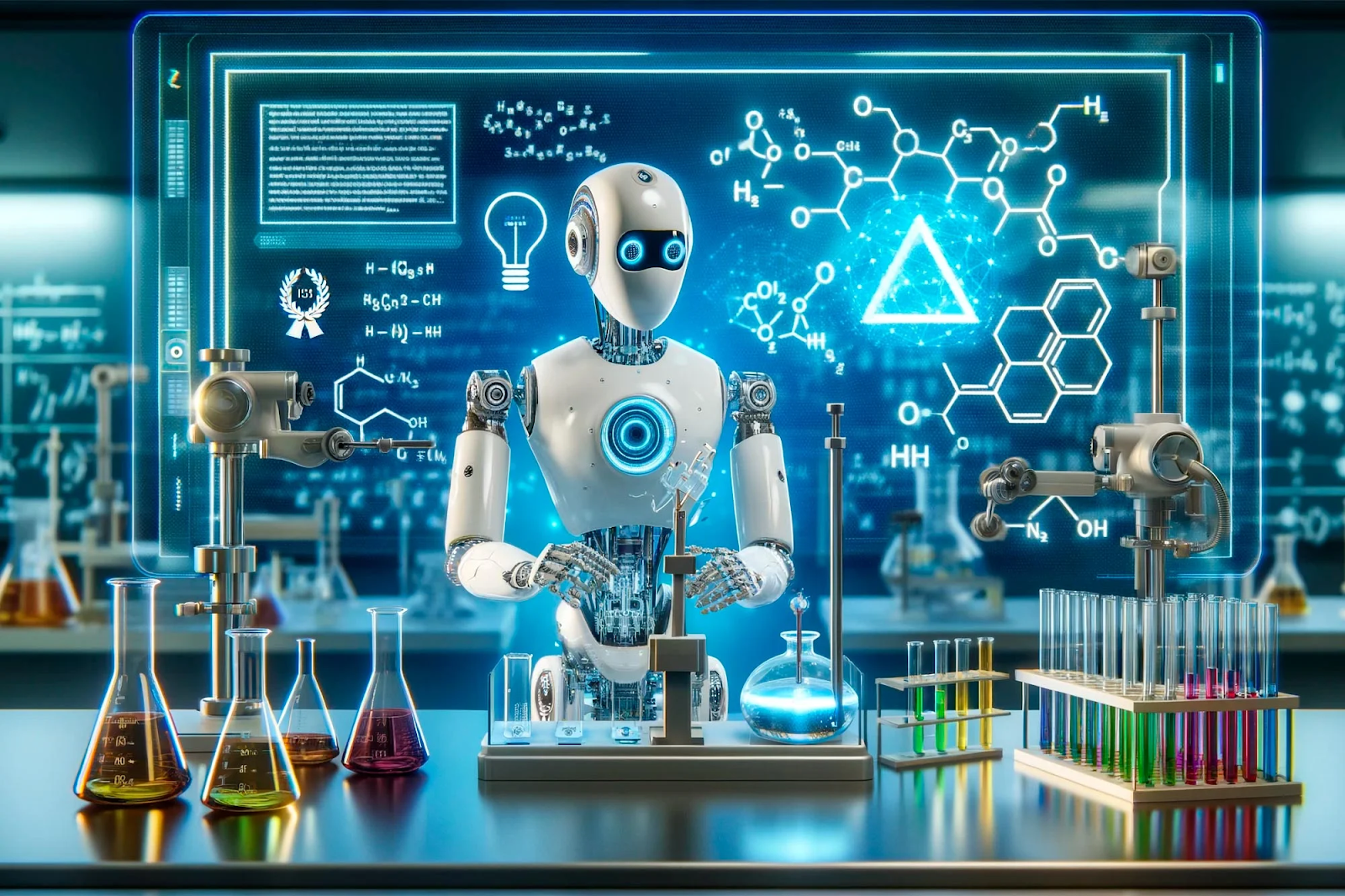
Coscientist is the artificial intelligence that controls the laboratory and supervises the work of scientists. That thing should make scientific work safer, more valuable, and more accurate than ever before. The scientists are algorithms that control things like warnings against unauthorized chemical compounds and unauthorized production of narcotics or toxic materials. 

That scientist can also observe that people who deserve honor will get honor for work, that they have done. The scientists can also make old-fashioned access cards and keys unnecessary. The AI-based systems can recognize people by using multiple different biometric details like the retina, fingertips and maybe even DNA that it takes from the skin. The AI-based coscientist can make notes about used variables. And it can act like Chat GPT. The human scientist gives certain values to the system, and then the AI-based co-scientist does the duties like turning test tubes. 

AI-controlled laboratories are the new type of tools in advanced chemistry. AI can make sensor fusions for the laboratory. It can control fixed instruments like cameras and optical and electron microscopes. And human-looking robots and possible drones that can operate in highly accurately calculated chemical and physical environments. That environment makes it possible to calculate the reactions of the non-stable or complicated bonds with very high accuracy. 


https://scitechdaily.com/from-code-to-chemistry-coscientist-the-ai-system-mastering-nobel-prize-winning-reactions/

https://scitechdaily.com/revolution-in-material-science-scientists-construct-nanoparticle-quasicrystal-with-dna/

Thursday, December 28, 2023

Ultrasound systems can also revolutionize medical work.

    Ultrasound systems can also revolutionize medical work. 

The ultrasound helmet can observe blood flow in the brain while a person operates in real-world situations. That kind of system can create images and help predict possible blood flow anomalies in the brain. If one system has multiple uses that makes it more effective. 

3D scanning ultrasound sonar systems are tools. That can create 3D images of the inner organs. A functional ultrasound system (fUS) is used to operate as the BMI (Brain Machine Interface) sensor system. As I wrote in the last text.  The use of ultrasound-based systems in the BMI cuts unnecessary data away from the control system. 

If the receiving system must filter no-relevant or unnecessary data away from data flow it requires a hard operating system. That makes the system The EEG-based systems input too much data to a computer, and too accurate data makes things like welding robots slow, and the fact is, that all robots must not have the ability to work as surgeons. 

***********************************************************


ETH Zurich researchers have shown for the first time that microvehicles can be steered through blood vessels in the brains of mice using ultrasound. They hope that this will eventually lead to treatments capable of delivering drugs with pinpoint precision.

*A technology developed at ETH Zurich over the past few years for controlling microvehicles using ultrasound also works in the brain, as researchers have now been able to show.

*These microvehicles are gas bubbles, which are harmless and dissolve once their job is done.

*In the future, these microvehicles could be equipped with medications and deliver them to specific points in the brain. This may increase the efficacy of the drugs and reduce their side effects.

(ScitechDaily.com/Brainwave Riders: How Ultrasound Microbubbles Could Change Medicine)


"Scientists have developed a novel family of polymers that effectively kills bacteria, including E. coli and MRSA, without causing antibiotic resistance. This breakthrough, involving multidisciplinary collaboration, marks a significant step in addressing the public health threat posed by superbugs. Credit: SciTechDaily.com" (ScitechDaily.com/Bacteria-Killing Marvel: Scientists Develop Polymers That Defeat Antibiotic-Resistant Superbugs) The problem is how to get those polymers near bacteria. And ultrasounds can be one of the solutions. 


*********************************************************


But the functional ultrasound system (fUS) can also operate as the controller that drives medicals, like new nanotechnical polymers and nanobubbles to the right points. The new nanopolymers are like springs that go inside bacteria. And then the bacteria's enzymes launch that spring, which destroys the bacteria cells by cutting their protein shells. The system can drive those polymers to the right point using sound impulses.

Another tool that is mentioned is the so-called nano-and microbubbles. Researchers at the ETH Zurich, the University of Zurich, and the University Hospital Zurich have researched ultrasound-controlled micro-size gas bubbles to detect anomalies in the brain. Ultrasound systems are more effective tools than magnetic fields because those systems don't need magnetic material for interactions. 

Those micrometer-sized bubbles can brought to the body from outside or the system can create them in the blood vessels. The system can adjust the size of those bubbles and that helps the use of them to open blood vessels. The nanobubbles can also destroy bacteria. In some visions, the genetically engineered bacteria carry a small ultrasound system and it can create those bubbles using fast spinning fibers. The "local" ultrasound system can control those bubbles with extremely high accuracy. 

 In the future, the ultrasound system can create those bubbles by shaking blood cells or some polymers that are in blood vessels.  Nanobubbles can used to close blood vessels from the tumor. The system can also make nanobubbles by using the low pressure that impacting soundwaves are making. Those soundwaves can fill bacteria with nanobubbles, which makes them unable to operate. 


https://scitechdaily.com/bacteria-killing-marvel-scientists-develop-polymers-that-defeat-antibiotic-resistant-superbugs/


https://scitechdaily.com/brainwave-riders-how-ultrasound-microbubbles-could-change-medicine/


https://scitechdaily.com/brainwave-riders-how-ultrasound-microbubbles-could-change-medicine/

Tesla’s flying roadster is an interesting concept.

Image: Tesla/Interesting engineering.  A flying car is a term for an aerial vehicle. It can fly. It can also travel on the road like a car. ...