Friday, June 9, 2023

New liquid metals can make a revolution in nanotechnology and quantum computing.

Liquid metals that cover the things like paper or some other organic materials are the next-generation tools for AI and for transforming machines along with quantum computers. The liquid metals can make it possible to create liquid robots that can remove tumors and non-wanted cells from the human body. If liquid metal droplets can operate in human blood vessels. It can close blood flow to the tumors. But the transforming liquid metal machines can make many other missions than just acting as the intelligent scalpel. 

The liquid metal robots can slip into the computer center and record data that travels in cables. Liquid robots that surface can turn solid can use to fix damages in cars, aircraft or ships, and satellites. If there forms a hole in the aircraft's structure during flight, the system can release those liquid robots to fix the holes. 

By using liquid-metal-based pressure systems is possible to turn 2D microchips superconducting. That kind of pressure system makes it possible to create Schrödinger's cat-style quantum system. 

This computing system is at the same time binary and quantum systems. Or actually, the system can switch the mode between binary and quantum states. That makes the system more scalable than at any time before it. 

The ability to drive information into the binary system makes it easier to control it. And then, the binary state of the system will transform into the quantum state. That happens by transforming it into a superconducting form. The quantum state processes the information. 


"Researchers have developed a new method of applying liquid metal to surfaces such as paper and plastic, transforming these everyday materials into potential “smart devices.” Future endeavors aim to broaden the application to diverse surfaces and to construct smart devices from materials treated by this method". (ScitechDaily.com/Liquid Metal Breakthrough Can Transform Everyday Materials Into Electronic “Smart Devices”). 


And then, it will return the system to the binary state. That happens by removing the superconducting state. This kind of system will make the superconduction by using a hybrid system that decreases the temperature and raises pressure for locking atoms in stable conditions. 

Liquid metal structures can make the next-generation AI-based systems possible. In those systems, the 2D microchip is below the liquid metal-based structure. When the magnetic system pulls the liquid metal to the 2D microchip it increases its pressure. And that pressure will raise the temperature that requires turning the 2D microchip to superconduct. 

That system makes it possible to create hybrid systems. That is the same time as binary and quantum computers. In that kind of system, the system drives information in the binary system. The binary system stores that information. Then the high-pressure-low-temperature system turns the binary system into a quantum computer. When the quantum computer is made its run, the system can return it to the binary state, and then drive processed information to the screen. 

Liquid metal robots are the tools that are making many things that have been sci-fi before true. Things like T-1000-style robots that can transform their form might be closer than we think. And there are always threats in those systems. 

Liquid metal robots are actually like drone swarms. They can transform into any possible form. The only thing that limits the system's abilities is the number of nanomachines and microchips. Theoretically, the liquid metal robot that uses the 2D microchips can change its computing state between primary and quantum states by using pressure systems where the liquid metals form pressure that turns those 2D microchips into superconducting. 


https://scitechdaily.com/liquid-metal-breakthrough-can-transform-everyday-materials-into-electronic-smart-devices/


Quantum-computer-based AI is better at guessing than humans.

Statistics play a vital role in computer-based guessing. The system makes statistics about the probability of how often some cases are happening. And then, the system will use the statistics for making guesses. The reason why the computer wins over humans in guessing competition is that the computer has statistics about the most common cases. And then the computer must just answer by using the most common case. 

The fact is that the regular, binary computer-based AI might also be better at guessing than humans. In those cases, the AI will not guess things like humans. The AI will use probability calculations and probability databases for making guesses. 

"Scientists achieved a quantum speedup by effectively suppressing errors in a bitstring guessing game, managing strings up to 26 bits long. They showed that, with proper error control, quantum computers can execute full algorithms with better time-scaling than conventional computers, even in the current noisy era of quantum computing". (ScitechDaily.com/Quantum Speedup – Quantum Computers Are Better at Guessing)

If there is a known case. And all records about those cases are stored in databases like how many times the coin's heads and tails side is upward if we throw it the computer can use those kinds of databases to guess what is on upward heads or tails. There could be recorded the database about thousands of heads or tails cases, and then the computer can use that database for making probability-based guessing. 

The probability-based guess is a simple thing. If the computer has a good database of the variables. The computer can collect that database by using things like traffic control cameras. And then it can calculate which way to turn is more popular to right or left. Statistics are the key element for mathematics-based guessing. The idea is that the computer finds the most common cases and then makes guesses by using statistics. 

The AI is the ultimate tool. And AI-based systems can boost business architecture. The AI can collect databases about marketing courses or how people behave in certain situations. And that data is also suitable when the AI tries to predict: how people behave in risky situations. 

If the AI can predict things. Like when the regular driver turns the car in a panic situation. That thing makes it possible to create more advanced and safer autopilots. The system can collect statistics which is the most common direction where a right-handed person turns the vehicle. The autopilot could help to predict the trajectory of the incoming vehicle and avoid destructive situations. 


https://scitechdaily.com/quantum-speedup-quantum-computers-are-better-at-guessing/

Thursday, June 8, 2023

AI revolutionizes material research.


The new types of nanomaterials are very complicated molecules. The same technology developed for medical research can also use in other complicated molecular structures. And we can think that medicines are also complicated structures. Making those structures is like playing some Tetris game. The femtosecond lasers aim the molecules and submolecular structures in the right position. That they can take their place in the 3D structure. 

And in those structures, the functional parts of the molecules open when the molecule is in the right position. When it travels through, for example, an ion pump, that thing uncovers the functional layer of the molecule. 

Microscopes are following the position of the submolecular structures. And the thing that makes AI a powerful tool is that it can follow large entireties. Complicated, large-size molecules require multiple components, and the AI must follow all actors very carefully. 

The energy levels of those groups must be just at the right level, and less than a second look in the other direction can make the molecule unable to work, because the laser drives the sub-molecule to the wrong point. That's why AI is the ultimate tool for that kind of operation. AI never looks away or ever gets tired. 


"High-throughput combinatorial printing illustration. The new 3D printing method, high-throughput combinatorial printing (HTCP), drastically accelerates the discovery and production of new materials. Credit: University of Notre Dame" (ScitechDaily.com/Revolutionary 3D Printing Technology a “Game Changer” for Discovering and Manufacturing New Materials)


So molecular research is done in two stages. At first, researchers used complicated simulations where they are making virtual molecules. In that kinds of systems, the functional groups of ions and molecules are modeled in high-power computers. When those virtual molecules are ready, the AI-based system starts playing Tetris using magnetic fields, ion cannons, and femtosecond lasers. The particles hover in the magnetic field, and the lasers push them to the right position. 

The new types of 3D printers that use controlled chemical environments like noble gas or complicated gas mixtures for catalyze and inhibite reactions, ion cannons, magnetic fields, and femtosecond lasers to transport single ions in complicated structures making it possible to create more and more complicated molecules. 

The difference between nano- and regular materials is that nanomaterials are produced at the molecular level. That means every single atom's position in the molecular entirety is precisely determined. And that thing makes the new types of materials possible. Things like nano springs that making material flexible but strong are making material harder than steel. In those cases, the nano springs make an impact on them. 

Nanotechnology makes it possible. That material created the nano-channels or nano-size accelerators. Those materials are the same way hard as solid materials. But things like cold atoms can be driven through that layer. And that keeps the material cold. But that technology can connect with ion-based systems. That allows researchers to drive ions through those materials. And that thing makes it possible to create new types of stealth systems. 


https://scitechdaily.com/ai-revolutionizes-antibiotic-discovery-a-new-hope-against-evasive-hospital-superbugs/


https://scitechdaily.com/revolutionary-3d-printing-technology-a-game-changer-for-discovering-and-manufacturing-new-materials/


The new superconducting diode is a small step for electric components but a big step for quantum computing.

The new superconducting diode might be a bigger advance than developers believed. That kind of component allows researchers to create the next-generation solid-state quantum computers possible. Superconduction is necessary for solid quantum computers because it denies the oscillation and its effect on the superpositioned quantum entanglements. 

The superconducting wire is required in quantum computers because it allows transferring of data in that wire without the need to be afraid that the internal oscillation of the wire transforms the form of information. So, when data travels in the superconducting cables it keeps its form and one version of the qubits might be skyrmion that travels on the superconducting wire. 

The problem with superconducting quantum computers, especially their miniaturization is that electricity jumps over switches and other components. The superconducting diodes allow controlling the direction of the electricity in the superconducting component and that thing allows to create the laptop-size quantum computers. 


"Researchers have engineered a novel superconducting diode that shows promise in enhancing the performance of artificial intelligence systems and scaling up quantum computers for industrial applications. This device outperforms its counterparts with superior energy efficiency, the ability to process multiple electrical signals simultaneously, and a unique series of gates controlling energy flow". (ScitechDaily.com/Next-Gen Superconducting Diode: Enhancing AI Performance and Quantum Computing Scalability)

Portable quantum computers are problematic tools. Even if they are unable to make high-power scientific calculations, those systems are suitable for code-breaking missions. And at least the eldest systems are at risk for data security. Quantum systems can easily break old-fashion systems that run the simple encoding algorithm. 

The race in quantum technology is the next-generation weapon race. The quantum computers that are running the AI are the new tools for military intelligence. That kind of hybrid technology makes it possible to break any code in the world. And there is no binary system that can resist quantum computers-based attacks. 

The development of AI and quantum computers is a complicated thing. Some people say that we should take a break from that kind of technology. But the dirty fact is that nations like China are developing AI-quantum technology hybridization. And the only thing that can create the algorithms that can protect people is another quantum computer system.

China proved that government-supported hackers are the next big threat on the internet. Those governmental hackers are operating under the control of the governments. And the thing is that also criminals like cocaine cartels are interested in hackers. The cocaine cartels might want to create quantum computers that they can use against governmental computers.  

The paradox about quantum computers is that the only thing that can protect data against quantum-computer base attacks is another quantum computer. 

And we can say that the next race in the world is the race between advanced quantum-AI-based attackers and advanced quantum-AI-based defenders that can try to block the quantum-base attacks. 

The problem with the small and portable quantum computers is that those systems can be the same way dangerous as the government operates quantum-AI hybrid systems, but also regular people can buy those systems. The price of portable, lightweight quantum computers that are made for quantum simulations is not very high if a customer is a billionaire. 

And actors like cocaine cartels are interested in this kind of technology. Quantum computers allow those criminals can break into governmental computers. And that's why we must protect the internet against quantum computer attacks. And the best way is to transfer the security algorithms to run on the quantum base technology. Because if we don't make that thing somebody makes the quantum computer. That is used in that kind of attack. 


https://scitechdaily.com/next-gen-superconducting-diode-enhancing-ai-performance-and-quantum-computing-scalability/

Wednesday, June 7, 2023

The U.S. Navy wants to create MHD-drive for submarines and other vehicles.


The MHD (Magnetohydrodynamic drive) is like a particle accelerator or ion cannon that drives ions through the tube or over the submarine's or surface ship's layer. The thing that makes MHD interesting is that the system is silent. The catamaran can be equipped with magnetic accelerators that are between the trunks of the catamaran. In Japan, the test vehicle Yamato 1 reached a speed of 6 knots in tests. There that test vehicle used an MHD drive. 

The U.S. Navy program would be more successful, because the Navy wants to use the MHD in nuclear-powered submarines, and today there are more advanced magnets and superconducting technology that makes the MHD more successful. Nuclear reactors can give far more power than Yamato 1's conventional engines. 


The saucer-shaped airships can cause the UFO-alarms. In those cases, the lights below blimps are meant to warn other aerial vehicles. And there is the possibility that some of them are used to test ion-based stealth or engine systems. If an aerial vehicle uses an ion shell or ion cloud around it, that thing could explain the mysterious shine around those vehicles. 


"Yamato 1 on display in Kobe, Japan. The first working full-scale MHD ship." (Wikipedia/Magnetohydrodynamic drive)


The MHD-type systems can make the ion shell over the aircraft. And that in the shell can turn to ion stealth. If aircraft needs to fly using this kind of system it requires more powerful engines. But ion- or plasma stealth uses similar-looking systems that MHD uses. There is the possibility that some airships or blimps are using the MHD. So that means the MHD-using aerial systems might not be heavier-than-air. 

There are theories that some UFOs are using the MHD or MDD (Magneto dynamic drive). The MDD means that the MHD is not limited to water. Theoretically, it's possible to make magneto dynamic ion-based propulsion where the air will ionize at the front of the aircraft. And then the magnets at the aircraft's wings will pull ions over them. That kind of electromagnetic propeller might be interesting because that allows the making of the ion shell for aircraft. And that in the shell will turn to the ion stealth system. 

But the fact is this the MHD-driven aerial systems might not be heavier than air. The blimps or modern airships can also use ion engines. That means the conventional airship could ionize air at the front of its route, and then the ions will be driven to the back of the airship. The disk-shaped blimp can also ionize the gas in the middle of it. And then the radially installed magnetic accelerators drive ions in the wanted direction. The system might not allow the airship to fly very fast. But it allows it to transfer its position silently without propellers. 


https://inaireon.com/

https://hackaday.com/2023/06/05/navy-program-pumps-up-hopes-for-magnetic-propulsion/

https://www.naval-technology.com/features/darpa-silent-mhd-magnetic-drives-for-replacing-naval-propellers/

https://www.popularmechanics.com/military/navy-ships/a44067238/mhd-drive-technology-submarines/

https://en.wikipedia.org/wiki/Magnetohydrodynamic_drive


Methane could be a good source of hydrogen.

Methane gas (CH4) is one of the most interesting energy sources in the world. Bacteria make that gas from biomass. So that thing can make the mechanical cow possible. The mechanic cow means the system where inside the robot's stomach is the cell culture there are methane bacteria. That kind of robot can make energy from all types of biomass. 

In some visions, the mechanic sea cow or yacht can use internal methane bacteria cultures to create methane for its turbines. These kinds of systems can be new and powerful green energy systems. 

Methane is a good hydrogen source. But that requires a filter system that removes carbon from that molecule. 


Methane is a hydrocarbon gas that could quite easily filter. And if carbon is removed from the methane molecule. That gas could be a good and clean energy source. If we think that methane can use as an energy source in robotics, there are two ways to make that gas carbon neutral. 

The first way is to remove carbon from the methane. And in that process, the carbon filter removes the carbon from the methane molecule. Or in another version the exhaust gas can filter. 

And if the filter system could remove carbon. That makes methane a clean and good energy source. The methane bacteria can grow in the cell cultures. Then those bacteria can form methane, and that system could drive to the turbines or fuel cells. The only thing that methane bacteria requires is biomass that it uses as a nutrient. 


That kind of system can create hydrogen for turbines. That cell culture or nutrient can install in the vehicles like yachts. In that kind of system, all kinds of biomass can make biologically produced clean fuel if the system can remove carbon. And that thing would revolutionize engineering. The methane allows creating the robots and machines that are more independent and multifunctioning than ever before. Those robots can find their fuel from any kind of biomass. 

https://scitechdaily.com/puzzle-solving-mastery-how-a-methane-producing-bacterium-creates-its-own-sulfate-reduction-machinery/


High-speed yachts use the same technology, which is suitable for both civil and military purposes.

The green perpetual motion machine. 

The craft can use Flettner rotors to create hydrogen. The Flettner rotors are rotating generators that drive electricity to electrolysis chambers. Then those chambers. Are used to create hydrogen and oxygen for turbines that can move even large-size ships. But also more conventional systems can use in high-power hydrogen-burning turbines. Modern technology allows installing Flettner rotors also in small crafts. Those rotors can have adjusted height. 

The CONAS (Combined nuclear and steam propulsion) the system can modify to burn hydrogen. In that modified CONAS system nuclear reactor can use to make hydrogen in the electrolysis chamber. Then the system drives that hydrogen to the gas turbines that can give extremely powerful thrust to ships. 

The CODLAG (Combined diesel–electric and gas)-type gas turbines are coming to small-size sea vehicles. The idea is that diesel engines are used to rotate generators. That generator drives electricity to electrolysis chambers that separate hydrogen from seawater. And then the system can drive that hydrogen and oxygen driven to gas turbines. 

In harbors, the system can load hydrogen tanks by using outside power sources. And there is the possibility that those yachts are also equipped with solar cells, and of course, the capillary tube that pulls the water through the turbine, can make those kinds of systems greener than ever before. Those kinds of green energy sources can use in places. Where oil leaks can cause natural catastrophes. 


Maybe that kinds of systems are not filling hydrogen tanks using electrolysis very fast but they can offer a green way to create hydrogen in cases where there are problems with diesel units. In some ideas, the yacht can also use Flettner rotors for the hydrogen creation process. As I wrote in that system the Flettner rotors can create hydrogen and then the system can drive that hydrogen to the turbines. 

The diesel system or low-pressure diesel engines that can use methanol or some other types of green fuel and filter exhaust gases with active carbon can make those kinds of systems greener than ever. And of course, combustion engines can use hydrogen. The hull of those crafts might have a vacuum space, that decreases their noise signature. 

The system can also be equipped with hydrofoils. In new systems, the hydrofoils are the hydraulically operating wings that the system can lay down from the yacht's body. When those wings are not needed the system can raise them. And advanced AI-driven navigation systems make it possible. That those fast yachts can operate fully- or semi-automatically. The advanced low-level light TV and Lidar systems allow the craft can see in the dark. 

And those fast yachts' military versions are easy to equip with weapon systems like powerful 30-mm. "Bushmaster" cannons and small attack missiles. Engineers can hide those systems under hatches so outsiders cannot see what happens inside them. 

Those systems can make damage to things like radar arrays or they can damage the commanding bridge. The system can point targets to larger warships or they can carry special staff around the world. The thing is that also criminals like drug smugglers might be interested in the fast crafts that speed can be over 150 hm/h, and the advanced autopilot allows them to operate while their crew sleeps. 


https://en.wikipedia.org/wiki/Combined_nuclear_and_steam_propulsion


https://en.wikipedia.org/wiki/Combined_diesel%E2%80%93electric_and_gas


https://en.wikipedia.org/wiki/Flettner_rotor


https://en.wikipedia.org/wiki/Rotor_ship

Tuesday, June 6, 2023

New exotic states of matter are removing the limits between computers and "dum" materials.

All around the world researchers are working to find new materials with new quantum abilities. Those new quantum abilities make the material intelligent, and some of those materials might also act as computers. Things like Rydberg's states in electron shells make extremely small-size quantum computers possible. 

And this type of material makes it possible to create new types of nanotechnology that can create complicated structures automatically. That kind of technology makes things like T-1000-type liquid amoeba robots possible. Those amoeba robots can take many forms. And they can make many things that were SciFi before this true. 

The new quantum states of the material make it possible to create solid, extremely strong structures that can make information travel through it. In that kind of material, the material structures are turning that way they allow information to tunnel through the material. And that thing makes the material a quantum ghost. If electrons of the atoms make photons travel through the atom without interaction. That makes material invisible. 

In some models, the system will make skyrmions around the atoms. In that model, the skyrmions would make the quantum-roll system, that drives photons and wave movement in one direction through the material. That thing denies the echo from the material. 


"RIKEN physicists have demonstrated a unique quantum state called the quantum anomalous Hall effect in a disk-like device, proving that edge states aren’t necessary for this process. The team demonstrated Laughlin charge pumping in a quantum anomalous Hall insulator using a layered, donut-shaped disk composed of different magnetic topological insulators. This discovery expands the potential for discovering more new electronic phenomena in such materials". (ScitechDaily.com/Unleashing Exotic States of Matter: RIKEN Proves Edges Unnecessary)


Things like Bose-Einstein condensate are also a new type of material. In Bose-Einstein condensate the atoms are at minimum energy levels. And there is the possibility to use nanotechnology to create minimum energy points even in large structures. In that case, laser rays that travel between two graphene layers that connect to the material's surface act as thermal pumps. 

Those miniature thermal pumps are making the minimum energy points to the material. Those energy baskets allow material to expand or pump energy to those low-energy points. It makes material possible to stand higher energy levels and fast energy impulses.

The ability to create high-power pressure impulses making possible to levitate the object above the ground. Those high-power pressure impulses can also turn incoming objects away from their trajectories. The material can be two-layer graphene where are ions trapped between those layers. The energy impulses will stress those ions that are sending impulses to graphene. Or they can be gas-shaped loudspeakers. The ion clouds stress with radiation. 

Highly advanced materials can make things like ion clouds there they will aim for oscillation. The electromagnetic oscillation allows the material can turn the ion cloud around it into a gas-shaped loudspeaker. The gas-shaped loudspeakers can send high-power pressure impulses around them. That thing allows the material to levitate. But those pressure impulses also can turn incoming objects away from their courses. There are no limits to the material research. 


https://scitechdaily.com/unleashing-exotic-states-of-matter-riken-proves-edges-unnecessary/

Magnetic levitation and antigravity.


Antigravitation is much more than just levitation. The antigravitation makes it possible that aircraft can hover above the ground. But antigravitation can also turn the incoming ammunition to another course. Then antigravitation, or so-called "real" antigravitation that bases the gravitation could use to create the warp bubble. That real antigravitation would push all other material from around the craft. But that thing requires the possibility to create synthetic gravitational waves. 

Magnetic levitation might look like antigravitation. It's possible to make the ion cloud below the aircraft and then benefit from the electromagnetic pushing effect in levitation. That ion layer is created by using the laser or some other radiation and then the bottom of the craft will load with the same polarity of electricity. 

The system would make the aircraft levitate. The idea is that the laser ray forms the quantum propeller. That quantum propeller's purpose is to raise the air temperature below the craft. And that hot air along with the magnetic push effect can turn the craft hover silently. In some other models, the electromagnetic black hole forms the ion mattress that keeps the craft over the air. 

Also, things like superconducting objects can levitate over the layer. In that case, the falling air keeps that object hovering. By using superconducting magnets is possible to make even trains hover. In that system, the repelling magnets of the railroad and train push the train over the ground. And that makes the train faster and more economical than regular trains. 


Is this plane true or fake? You decide. 


In this image is the system that people claim "antigravity system". The system might base rather the ion mattress that makes aircraft lighter or makes it levitate like it uses antigravitation. In the TR3 Black Manta's models that is very interesting and at least theoretical stage aircraft uses a rotating magnetic field that pushes ionized air to the ground. That quantum propeller makes it levitate over the ground. 

In some models, the aircraft uses some magnetized liquid like mercury or iron powder for levitation. The system magnetizes those iron bites or mercury. And then the aircraft would hover by using those metal bites as repelling magnets. The craft will drop those metal bites into the air and then that cloud will push it up. And finally, the system can use a magnet and collect those iron or mercury bites back to the chamber. 

The new nanomaterial like graphene is allowing to make of homogenous single-frequency radiowaves. And that kind of technology can use to make the aircraft invisible to radars. The idea is that the carbon atoms are used as antennas that deliver single- or mono-frequency radio waves. 

The fact is that the graphene that is covered by using as an example iron atoms can act like a magnetic monopole. The iron bites would install on the outer side of the graphene. And then EM-radiation stresses that structure. The iron atoms that cover the graphene layer will use to push ions away from the structure. The idea is that the air molecules will ionize, and then the magnetic field of those ions will push those molecules away from the graphene layers. 

But if someday is possible to make the real, gravitational wave-based antigravitation that the system makes possible. That aircraft can levitate over the ground. The real antigravitation system allows the craft can push incoming ammunition into another track. And that kind of thing is making antigravitation so interesting research object. 

https://www.military.com/video/aircraft/military-aircraft/tr-3b-aurora-anti-gravity-spacecrafts/2860314511001

https://science.howstuffworks.com/innovation/science-questions/antigravity.htm

https://en.wikipedia.org/wiki/Anti-gravity

https://en.wikipedia.org/wiki/Black_triangle_(UFO)

Monday, June 5, 2023

Femtosecond lasers can manipulate graphene.

Manipulating graphene and its shape is urgent for making that 2D carbon structure a useful tool for different purposes and components. The femtosecond lasers can make holes for different types of components in the graphene layer. The problem with 2D carbon and other 2D materials is this. 

Those materials lose their abilities in 3D structure. There is a possibility to make multi-layer graphene but in that case, those layers must be separated from each other by using the DNA bites that act as nano springs or fullerene-nanotube towers. 


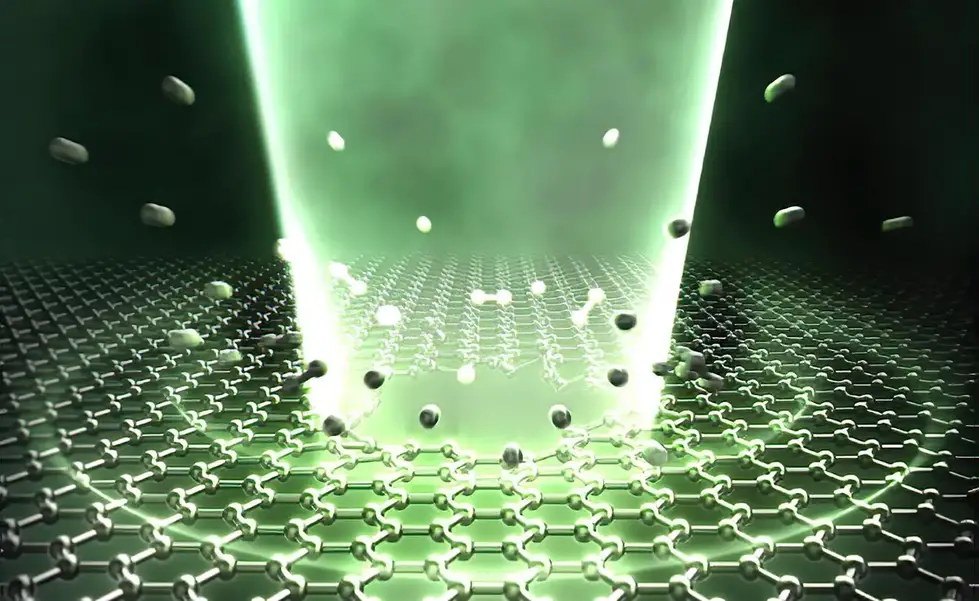
"Illustration of a graphene film being hole-drilled by laser irradiation. The size of the carbon atoms is exaggerated and differs from the actual size. Credit: Yuuki Uesugi et al". (ScitechDaily.com/Light-Speed Advances: Graphene Nanoprocessing With a Femtosecond Laser)


But in that case, there must be some kind of place. Where engineers can install those auxiliary nanostructures. The thing that makes graphene interesting is that is pure carbon. That makes it possible to create mono-frequency radiation by stressing that carbon structure with electromagnetic radiation. 

Researchers can use these kinds of things in communication tools and even in electromagnetic levitation tests. The idea is in those tests the system creates mono-frequency electromagnetic oscillation that turns to pressure signals which push those objects above. 

If there is a hole in the graphene layer, and a laser ray will shoot through it that system can act like a thermal pump. The laser ray will pull energy out from the graphene layers. And that thing might make it possible to create new and powerful microprocessors. If a laser ray will shoot through the multi-layer graphene that thing will cool the surface, and then it can use for making the infrared signature lower. 

Theoretically is a very easy thing to cover even large layers using graphene. The problem is that graphene must be separated from the layer for maximum benefit. The separated graphene layer connected with the metal layer by using the nano-springs makes the new type of system possible. The graphene can act as nano-armor and those nano-springs will receive part of the impacts that affect that 2D nanolayer. 


https://scitechdaily.com/light-speed-advances-graphene-nanoprocessing-with-a-femtosecond-laser/

Sunday, June 4, 2023

The world's first fully functioning 2D microprocessor is true.

It's time for 2D microprocessors. The 2D microchip technology makes the microchips resistant to fast acceleration. And that makes them suitable for use in guided artillery ammunition. But also other devices that accelerate very fast can use those 2D microchips. 

Another place where 2D microchips can use is implanted medical microchips. The 2D microchip can be surgically implanted between bones and muscles. If 2D microchips are put between skin and muscles, that structure makes them more comfortable than regular 3D processors are. 


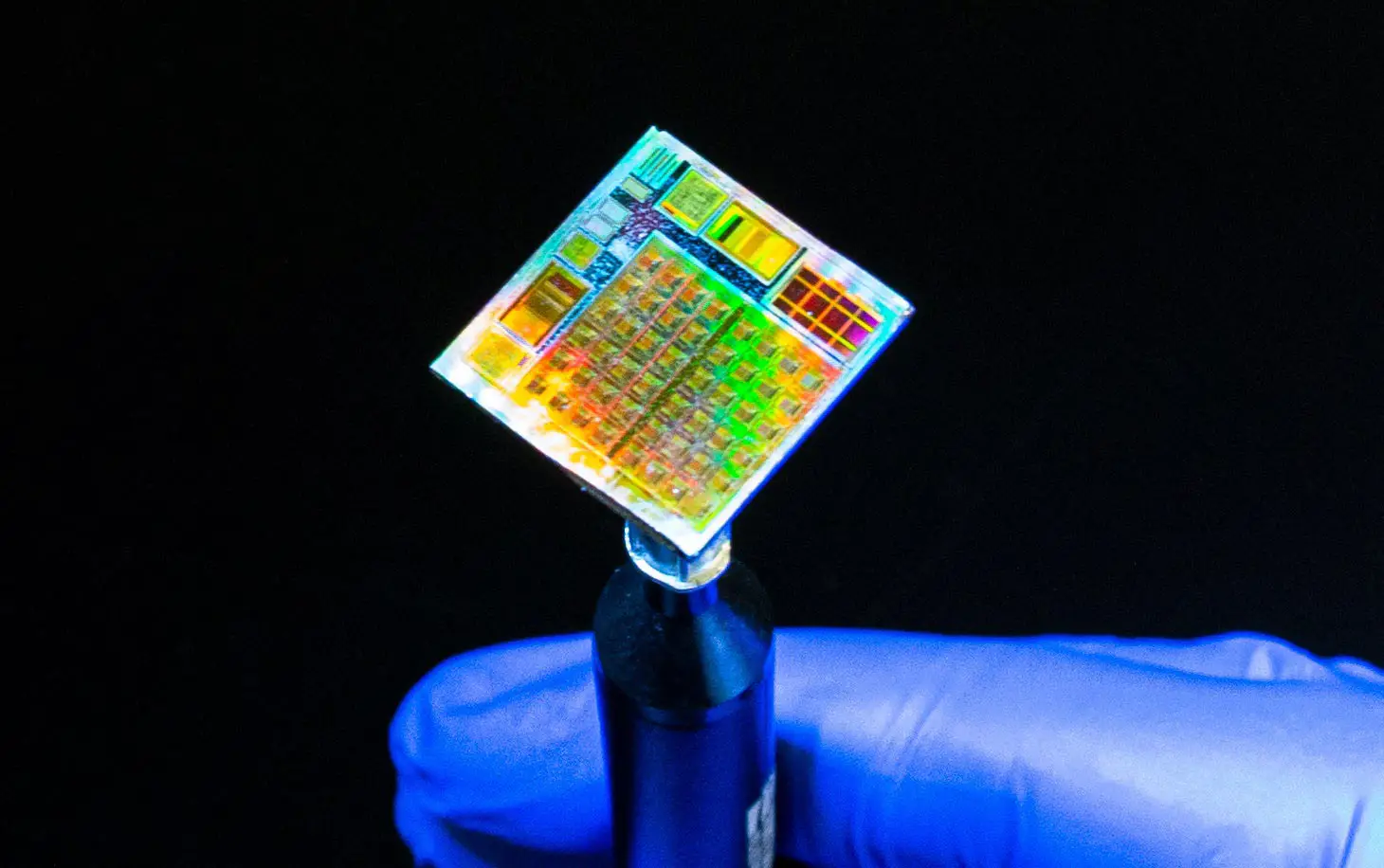
"KAUST Professor Mario Lanza and his co-researchers have successfully designed the world’s first 2D microchip using synthetic materials. Despite fabrication challenges, the team successfully created a chip functioning as a high-performance, low-power neural network element, opening doors for the advancement of microchip technology. Credit: © 2023 KAUST; Mario Lanza" (ScitechDaily.com/A Thin Leap Forward: World’s First Functional 2D Microchip)


The 2D microprocessor technology allows researchers to connect them to animals like sharks. Those microchips can deliver information about the life of those animals. 2D microchips also can use to implant the insects like flies, and those kinds of systems can use to follow the fly of flies. Things like flies can use to search carcasses from forests. 

2D microprocessors can use in many roles. That technology makes it possible to create extremely thin and lightweight computers. And if those computers can create energy from sweat. That makes it possible to put those paper-thin computers on the skin. 

Then the person can use it by using the screen keyboard that is on that system's surface. Or maybe the user uses the BCI (Brain Computer Interface) that transforms the EEG into text. The main problem with those computers is their user interface. The paper-thin computer can itself have a WLAN capacity, and it can use the cell phone as the gate to the net. 

The paper-thin microprocessors can observe things like wall elements or metal structure conditions. Those microprocessors are easy to install under the wallpaper or paint. In that case, the radio waves can deliver electricity to those sensors. Another version is the extremely thin silicon solar panel that delivers energy to that flat computer. 


https://scitechdaily.com/a-thin-leap-forward-worlds-first-functional-2d-microchip/

New winds for interstellar probes.

“Light sails can propel spacecraft using the energy of the Sun. Credit: NASA/Aero Animation/Ben Schweighart” (ScitechDaily, Humanity May Soo...