Saturday, July 16, 2022

Researchers at Kyoto University are starting to test artificial gravitation.


Above: An artist's view of the internal structure of the O'Neill cylinder.

Artificial gravitation is a key element in long-term space travel. The simplest way is to make a cylinder-shaped space station that rotates around its central axle. That thing forms a centripetal force that pulls objects to that structure's core. 

Physicist Gerard K. O'Neill introduced an idea for that kind of that rotating space station was introduced by in the year 1976. And that's why the name of that kind of system is the "O'Neill cylinder". 

The problem with that kind of cylinder is that its rotation speed must be quite fast that it can create the artificial gravitation that is so strong as the gravitation on Earth. So the centripetal force will rip that structure into pieces. And then another argument has been that rotation causes nausea. But the fact is that the gravitation must not be so powerful as it's on Earth. 

The idea is that gravitation anchors vegetables and furniture to the floor of the craft.  And the second thing is that crew can control nausea by using the nausea patch. But the structure of the O'Neill cylinder can be very strong. 

The cylinder can cover by using a steel layer. Then powerful magnets can pull the steel layer inside. That magnetic system can compensate for the effect of centripetal force. By using magnetic assistants, the system can create gravitation. That level is similar to Earth's gravitation. 


https://www.designboom.com/technology/the-glass-artificial-gravity-facility-kyoto-university-07-11-2022/


https://en.wikipedia.org/wiki/O%27Neill_cylinder


There are introduced theories, that in the future be the space race. That space race lives entirely their lives in spacecraft and never lands on any planet. 

Maybe in the future is the space race whoever lands on any planet. And that race could live on the zero-gravitation conditions their entire life. That means those people will spend their entire life in space without the ability to land on planets. If those spacemen land on Earth. The gravitation field will crush their bodies immediately. 

The manned interplanetary and later interstellar systems require artificial gravitation if the crew wants to land on some other planets. There is created an idea that the futuristic astronauts who will go on interstellar journeys would live their entire life in zero gravitation conditions. 

That means their muscles and bones will be extremely weak. But those astronauts could control remotely controlled robots on the planet's surface. Those astronauts would never land on any planet themselves. 

When we think about the colonization of the solar system and universe we can think that it goes a similar way to the colonization of Pacific islands. The first humans will colonize the closest planets and moons. But then the journeys will go farther in the solar system. 

And then colonization of Neptune and the Kuiper Belt causes the journey to there and return takes 10-20 years. During those journeys, astronauts will adapt to the weak gravitation. And then some of those people will never return to the surface of any planet. 

Maybe evolution will go that way when we are creating our first interplanetary spacecraft and first laboratories on other planets. Sooner or later, there will be people who will not want to return to Earth. And then the first space-babies are born. 

Those babies think that the base on some icy moon or space station is their home. They ever miss Earth. That is the birth of the space population that will travel more and further away. 

When we are thinking about the real hypothetical space exploration to another solar system and icy moons of Jupiter and Saturn, there is the possibility that astronauts bring some hostile organism like bacteria from the lakes of those planets or moons. That's why the operations on the surface of the planets or icy moons should make be using robots. 


https://likeinterstellartravelingandfuturism.blogspot.com/

Friday, July 15, 2022

The ramjet-driven artillery shell can be the game-changer.


Norwegian Nammo-corporation develops a new solid-fuel ramjet-driven artillery shell along with many other defense contractors. The ramjet-driven GPS-guided grenades which range about 90-150 kilometers could be effective against things like TOS rocket launchers. The technology behind the GPS-guided grenades can connect to things like HiMARS heavy rocket launchers. And that thing gives them pinpoint accuracy. 

The ramjet-driven ammunition is not a new idea. In 1915 Hungarian inventor Albert Fonó introduced the idea of ramjet-driven ammunition to increase the artillery range. This solution was far ahead of its time. In 1915 there was no GPS. And the development of solid chemicals that could use as ramjet fuel did not even begin. 

And researchers forgot the ramjet-driven artillery ammunition for a while. In WWII some artillery systems used RAP (Rocket Assistant Projectiles) to increase their range. After the WWII. Ramjet engines are used in some missiles. And those engines are also introduced to use hypersonic cruise missiles. 

The operational speed limit of the ramjet engine is about Mach 1 to Mach 6. Then the engineers must start to use a scramjet engine whose operational limits are from Mach 5 to Mach 20+. But also scramjet-driven systems can use ramjets to accelerate their speed to a level, where the scramjet can start. 

The aircraft will accelerate to the speed of Mach 1 by using the regular turbojets. Then the ramjet engines will start to operate. And after the speed increases to Mach 5, the scramjets will start to operate. And they will increase the speed of the cruise system to levels, that are above Mach 10. 

The ramjet-driven artillery shell uses solid fuel. That means the system takes oxygen from the air. And the friction of the air will start to burn the fuel inside grenades. The GPS-guidance systems are allowing to give those shells pinpoint accuracy. The GPS is not the only possibility to guide ammunition to the target. The ramjet engine can increase the range of the shell by about 100 kilometers. The range of the newest GPS-guided M-982 "Excalibur" ammunition is a maximum of 70 kilometers. The elder version range is 20-40 kilometers. The record of the 155 mm. grenade is about 76 kilometers. And the ramjet system can extend that range to 100 kilometers. 

But the range of that shell depends on its caliber, the aerodynamic property, and the used fuel. The thing is that the artillery shell is quite easy to accelerate to the speed that is about Mach 1. The thing is that if the 155 mm. ramjet-driven GPS-guided ammunition is successful. Theoretically, that thing gives M-777 field howitzers the range of 100-170 kilometers if the ramjet engine gives 100 kilometers more operational range for that system. 

The GPS-guided ramjet-driven ammunition can also use with new magnetic railguns that are under development. In those large-caliber systems, the magnetic accelerator is connected with the barrel of the regular howitzers. The large-size ammunition can accelerate by using magnetic accelerators to a speed that is much higher than using just only regular grenades. 

The range of those systems with ramjet-driven grenades could be over 200 kilometers. But those numbers are purely theoretical. 

https://www.defensenews.com/digital-show-dailies/dsei/2019/09/10/the-real-reason-why-nammo-rolled-out-a-ramjet-artillery-concept/

https://defense-update.com/20191127_long_range_artillery.html

https://www.wionews.com/india-news/iit-m-working-on-next-gen-ramjet-powered-155mm-artillery-shells-for-indian-army-282090


https://en.wikipedia.org/wiki/M777_howitzer

https://en.wikipedia.org/wiki/M982_Excalibur

https://en.wikipedia.org/wiki/Ramjet


Image:) https://en.wikipedia.org/wiki/M777_howitzer


https://realityisthinking.blogspot.com/


Sunday, May 22, 2022

Vladimir Putin claims that Russia has a laser weapon that can blind satellites and burn holes in them in five seconds.


Image 1)

The fact is that these kinds of claims and speculations have introduced in the Soviet era. At that time. There were rumors that the Soviets have massive laser stations near Moscow. And the DOD artwork introduced speculations. About what this type of laser station might look like. 

There were a couple of incidents where the Soviets targeted satellites by using lasers for covering their secrets. The satellites were not blinded completely and the laser ray just disturbed the photo-recon satellites. The things like CCD cameras and computer-aided photography decrease laser rays' effect. The CCD camera sends images to the computer by using all pixel groups separately. 

And all pixel groups are sensitive to a certain wavelength of light. So the system connects the image by using multiple separate images. And the computer can remove the wavelengths of the laser rays. The weakness of the laser ray is it has only one wavelength. And the system can remove the frequency of those laser rays quite easily. But the thing is that the laser systems that can destroy satellites are existing or under development. 

Image 2)

The new laser systems are impressive weapons. 


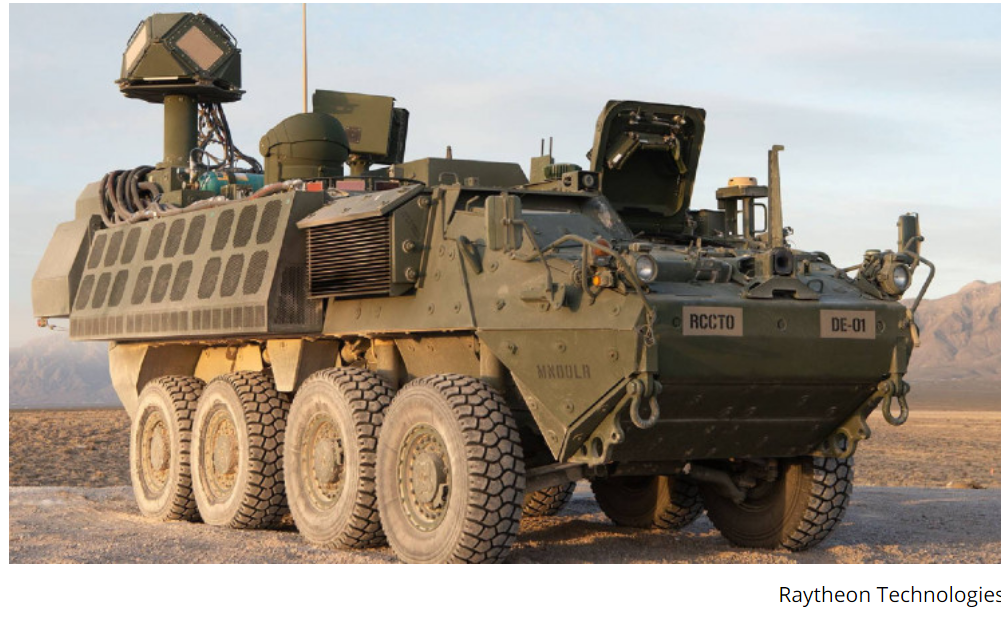
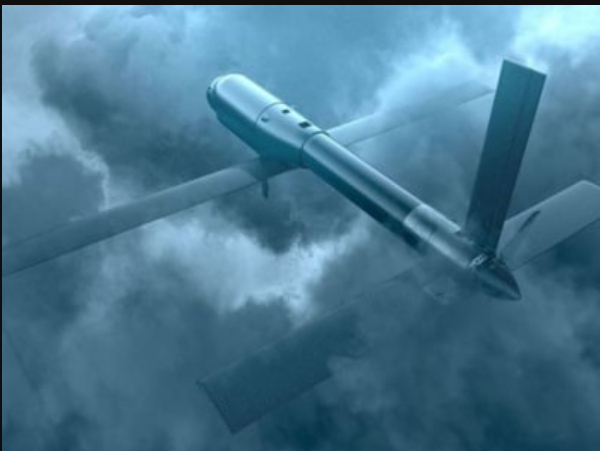
New laser systems can destroy multiple 60 mm. mortar ammunition. So they can protect all non-armored or armored vehicles and headquarters. They can use to defend things like GPS and other satellites. The laser system can also use in an offensive role. The same satellite that uses the laser weapon for defending itself against kinetic energy missiles can use to destroy other satellites. 

Raytheon system is tested Stryker-mounted laser systems that can take out 60 mm. mortar rounds and small and large drones. Those systems can also incoming antitank missiles. And they can be the next-generation tank-defense systems.

 But the same laser system can also install on the satellites. And it can use for both offensive and defensive roles. If a similar laser weapon. That mounted on Stryker will be installed in satellites that system can destroy incoming kinetic energy ASAT (Anti-Satellite Systems). 

The fact is that the small land vehicles, helicopters, and aircraft have laser weapons that can destroy the drones or even larger aircraft. Laser rays are also powerful tools against enemy soldiers. When a high-power laser impacts the body of the person that causes hydrostatic shock because cells are exploding. 


https://interestingengineering.com/stryker-mounted-laser-drones


https://www.pcmag.com/news/russia-claims-its-peresvet-laser-weapon-can-blind-satellites-burn-drones


Image 1:) https://www.gizmodo.com.au/2013/11/10-cold-war-weapons-that-terrified-us-military-intelligence/


Image 2:)  https://interestingengineering.com/stryker-mounted-laser-drones

Saturday, May 21, 2022

Flying wings are coming.


Computer-Generated Image of China's Xian H-20 Stealth Bomber. Image Credit: Creative Commons.


Chinese H-20 and the USAF B-21 stealth bombers are both flying wings. The flying wing design makes those aircraft more economical. And they can carry more payload. Also, the economical flight makes them fly longer time before refueling. And along with stealth technology that makes those bombers very capable for global operations. 

The thing is that those aircraft can be very fast because they are aerodynamically very capable. Their shape is smooth. And the curves are soft. That allows the radio waves from the radars to slide over their body without causing an echo. The same way that shape makes air molecules travel over the bodies of those aircraft. 

There is the possibility that the magnetic field around those aircraft is boosting the stealth capacity of those super bombers. The magnetic stealth system acts as the Earth's magnetic field and pushes the radio waves away from the aircraft. The idea is that the radio waves pass that object without reflection. And that makes those aircraft invisible to radars.

The speed of stealth bombers is limited because the super- or even hypersonic flight causes sonic booms. The air cone of the supersonic flight makes those aircraft easier to detect. So the optimal speed of the stealth bomber is about Mach 0,9 or high subsonic. But there is the possibility that those aircraft have AI-based systems that limit the speed subsonic when those aircraft operate in stealth mode. 

There is the possibility that when stealth bombers are moving to operational areas they use afterburners or even ramjet or scramjet engines. Then the pilot just turns one button to "stealth" mode and then the system limits the speed of the stealth bomber that it flies at subsonic speed. There are only a few details published about those highly classified bombers. 

In the future, stealth bombers can jump out of the atmosphere and make so-called ballistic jumps. That allows them to move fast to operational areas. And there, those bombers can turn to use stealth mode while they are searching for enemies from that area. 


https://www.19fortyfive.com/2022/05/could-the-air-forces-b-21-raider-stealth-bomber-be-made-faster/


https://www.19fortyfive.com/2022/05/the-b-21-and-h-20-mean-the-age-of-flying-wing-bombers-has-arrived/


Image: https://www.19fortyfive.com/2022/05/the-b-21-and-h-20-mean-the-age-of-flying-wing-bombers-has-arrived/


 https://artificialintelligenceandindividuals.blogspot.com/

Friday, May 13, 2022

Iconic A-10 Thunderbolt II "Warthog" still rules.

The top image: Fairchild Republic A-10 Thunderbolt II (Wikipedia/Fairchild Republic A-10 Thunderbolt II)


The old-fashion A-10 Thunderbolt II "Warthog" is still capable of its mission. The iconic tank buster tested its primary weapon the massive 30 mm. GAU-8 "Avenger" rotation cannon against the modern reactive armor. And the aircraft was still capable to use its cannon against the most modern armored vehicles. 

The reason why GAU-8 is so capable is that the cannon shoots multiple grenades and depleted uranium penetrators against the reactive body armor. Even if those explosive bricks can destroy a couple of grenades before they hit the body of the tank the burst of the grenades removes or explodes a large number of explosive bricks from the tank. And sooner or later those hits will strip the explosive bricks away from the tank. 

The "Hellfire" and larger-size "Maverick" missiles would be very effective against any tank in the world. The Hellfires can shoot against tanks in multiple salvos. But the larger size Mavericks can be devastating even against the warships. So the single Maverick missile can also destroy the tank which is protected by reactive armor. 


Image 1) Laser AGM-65E Maverick on a USN F/A-18C, 2004


Image 2) Hellfire missiles on the United States Marine Corps AH-1W Super Cobra


The idea of reactive armor is that explosive brick will detonate the grenade before it can make contact with the metal surface of the tank. In the most modern versions of that armor, its effect is boosted with steel flechettes that will shoot against incoming shells before it impacts the tank. The weakness of the reactive armor is that explosive brick can be used only once. And after the use of the new explosive brick must hang on the surface of the tank. 

The problem is that fast operating cannons can shoot multiple grenades against reactive body armor. The rate of fire of those cannons is over 2000 launces per minute. And those hits can strip the explosive bricks away from the surface of the tank. In the warzone is the possibility that one tank will be shot by using multiple missiles at one time. In the same way, the most modern anti-tank missiles can equip with tandem warheads. 

When that highly advanced ammunition will close its target it shoots sub-ammunition in front of it and the purpose of that sub-ammunition is to detonate the explosive bricks from the route of the weapon. Smart weapons like 50-100 kilogram GPS, image or laser-guided bombs, and 150-250 mm grenades are also very capable weapons against tanks. The problem with GPS-guided weapons is that the position of moving targets must update very often. 

There is the possibility that the small-size quadcopter will position the GPS location system on the tank. And then the system will send intensively updating location information of the target to the GPS-homing weapons. The fact is that this type of system would make fundamental things on the battlefield. 


https://www.businessinsider.com/air-force-tests-a-10-cannon-against-modern-tank-armor-2022-5?r=US&IR=T


https://www.19fortyfive.com/2022/05/forget-retirement-the-a-10-warthog-tested-new-reactive-armor/


https://en.wikipedia.org/wiki/Fairchild_Republic_A-10_Thunderbolt_II


The top image: https://en.wikipedia.org/wiki/Fairchild_Republic_A-10_Thunderbolt_II


Image 1) https://en.wikipedia.org/wiki/AGM-65_Maverick


Image 2) https://en.wikipedia.org/wiki/AGM-114_Hellfire

Tuesday, April 26, 2022

Ultrasonic waves and other soundwaves can use to charge nanotechnical tools. (And The futuristic self-organizing material can automatically create physical 3D holograms. )

"Schematic illustration of ​​wirelessly charging a body-implanted electronic device using an ultrasonic probe. Credit: Korea Institute of Science and Technology (KIST)"(ScitechDaily/Using Ultrasonic Waves To Charge Underwater and Body-Implanted Electronic Devices) The similar systems can use to charge underwater and even airborne devices. 


Wirelessly Charging Body Implanted Electronic Device


Nanotechnology allows making the of new types of chargers that are safe to use. The idea is to use sound waves for making electricity for the nanomachines or larger electric devices. The ultrasonic waves are one version of sound waves. The soundwaves and especially ultrasonic waves are pressure impulses. And pressure impulses can use to make electricity. The first version of this system bases the crystals. When nano-size quartz crystals are stressed by using pressure impulses. 

That small crystal creates electricity. In another version, the small-size turbines are starting to rotate when those pressure impulses hit them. The idea of the sound-based turbo generator is one of the newest ways to make electricity for electronic components and nanomachines. The system is similar to wind turbines but their size is far smaller. The LRAD system can impact the drone by using ultrasonic waves. And then those pressure impulses will tunnel through the liquid to the nano-size windmill system. 


https://scitechdaily.com/using-ultrasonic-waves-to-charge-underwater-and-body-implanted-electronic-devices/

The sound-based charger can give electricity to the small laser devices that operate in the liquid and create complicated magnetic structures. The lasers can use to make magnetic skyrmions that are allowing to move the parts of the nanotechnology in large entirety. 

When we think of the new miniature space shuttles they can act as the platforms for the new zero-gravitational factories. If the nanomachines are created by using magnetic bites hovering lasers can adjust the temperatures of certain bites. Nanotechnology requires absolute stable physical and chemical conditions. 

The hovering nanorobots that are operating in certain gas mixtures are interesting tools. When a robot requires recharge it can move away from the structure and then the soundwave can impact it. Also, small-size LRAD systems can move parts of nanomachines to the right position. 


https://phys.org/news/2022-04-nanoclusters-self-organize-centimeter-scale-hierarchical.html


The futuristic self-organizing material can automatically create physical 3D holograms. 


Those 3D physical holograms can copy the shapes of the structures, and that thing can revolutionize machinery. In the future, self-organizing nanomaterials can make it possible to make physical holograms. That means when the system takes an image of the object. That nanomaterial that is like the old fashion film makes the 3D model of the object. 

The idea of that nanomaterial is simple. The system bases similar exposure technology on old-fashion films. But the difference in this material is that the nanomaterial is turning into 3D structures. The idea is that the light-sensitive area in the crystal controls the growth of that thing. Each area on those crystals is sensitive to a certain wavelength or color of light. The control light stresses those crystals with certain light color. When the let's say the green lamp is on, that causes a photochemical reaction in the area that is sensitive to green light. And that makes it possible to adjust the growth of the crystals by changing the color of the light.

The new nanomaterial can self-organize in complicated centimeter-scale structures. The self-organizing nanomaterials can be the "physical fractals". Term physical fractal means the nanotechnical material that can form the structures. In some physical fractals, the idea is to use the stick-shaped molecule. The other side of that molecule can react to, for example, blue light. 

And another is reacting to red light. That thing makes it possible to make the holograms where certain points are blue and others are red. And that thing makes those molecules can take the shape of the hologram. In other versions, the reactive heads of the molecule are covered with the structure that resonates with certain soundwaves. When the molecule wanted to react.  That sound system brakes the cover. And that uncovers the reactive part of the molecule. 

The idea of self-organizing materials is based on the idea of reaction between organic and non-organic materials or molecules. As well old-fashion film makes the image the self-organizing materials are basing the film and growing crystals. 

Those complicated structures are like 3D physical holograms. The 3D-physical holograms are created by using crystals. There are light-reacting parts in those crystals. When the light impacts the crystal it reacts like film. But that 3D structure requires that the system can make the rising structures. 


https://phys.org/news/2022-04-nanoclusters-self-organize-centimeter-scale-hierarchical.html


https://artificialintelligenceandindividuals.blogspot.com/

Friday, April 22, 2022

New drones are revolutionizing the battlefield.


Image 1) H-6N bomber with YJ-12 hypersonic (or ballistic) missile. 


China tested its new hypersonic missile that can knock out the U.S supercarriers. The new hypersonic missiles with stealth technology are extremely dangerous in the wrong hands. The Chinese YJ-12 missile is at the H-6N bomber's centerline. And it can be very dangerous, especially for the ships. 

There is the possibility that somebody is developing a drone-hybrid system where the hypersonic missiles can shoot from the unmanned patrolling aircraft. The stealth hypersonic missiles are the new and powerful systems that can knock out even the large-size ship or they can hit all targets. 

But when we are thinking about the abilities of the new drones. They are all extremely dangerous. The small-size drones can be equipped with powerful anti-tank or high-explosive warheads. 


2) Artist's impression of the "Phoenix Ghost UAV". 


And the new "Phoenix ghost UAVs" are in test use in Ukraine. The Phoenix ghost UAVs are something new that has never been seen on the battlefield before. There are rumors that there are the next-generation small-size killer drones under development. Those new drones might be pocket-size. 

And they would not need any kind of explosives for making their mission. Things like high-pressure water impulses can also make drones dangerous. But there is a possibility that the operators are targeting the small-size drones by radio signals. The radio signals can use to load the batteries of the drones. 

But the same systems that are used for remote power transmitters can use to load high voltage electricity to the drone's core by using radio waves. If the drone is loaded with high voltage electricity it can destroy the material. 

The high-voltage electricity that is loaded into the drone's core will transform it into a flying electric baton. There is a possibility that pocket-size drones can use to damage electronics stun snipers or even kill enemies by loading high-voltage electricity to their core. That kind of system can be the next-generation tool for special operators. But the problem is that the mafia and other kinds of outlaw organizations can make that kind of system. 


https://eurasiantimes.com/china-flexes-muscles-with-its-hypersonic-carrier-killer-yj-21-missile/?amp


https://news.am/eng/news/697815.html


Image 1) https://militarywatchmagazine.com/amp/article/china-s-first-intercontinental-range-bomber-first-clear-footage-of-h-6n-ballistic-missile-variant-released

Image 2) https://news.am/eng/news/697815.html


https://likeinterstellartravelingandfuturism.blogspot.com/

Thursday, April 21, 2022

NASA "holoported" a doctor to the international space station.


Holoportation is a less impressive thing than real teleportation. The idea is to send the 3D holographic model of a person or merchandise long distances. The object will be digitalized to a holographic form. In that process, the system uses a combination of laser scanners and CCD cameras that will render the object's surface. The laser scanners scan the shape of the object. And then the CCD cameras will photograph the entire object. The idea is similar to covering the statue using photographs. 

And then the image will send to the receiver and turn into a hologram. The holoportation is a well-known thing in science fiction. That thing can use to send real-looking people to space stations. But it can also use for making fake targets for snipers in the security and military areas. The interactive holoportation means that the person whose image is sent to the space station sees what is going on by using 3D glasses. 

And of course, virtual headsets are giving the feeling that person is in the ISS. But the ultimate simulation can make by using water tanks. The person whose hologram will send to space can hover in the water tank that is used in the zero-gravitational simulation. 

Things like robot surgeons can operate inside the hologram. That means the outside observer can see the human-looking surgeon. But in that place is a robot. The hologram can use in medical and technical work. That means the person can first move the hologram hand. And if the thing goes as it should. The real manipulator can move and make the action. 

The holoportation can also use to send the machine parts to space stations. The scanned 3D images can send to the 3D printers that can make very high-qualified parts in a vacuum. The quality problem with machine parts that are made by using 3D printers is the result of the air bubbles that can affect the process. If the air is removed there are no air bubbles and that thing makes the machine part tight and strong. 


https://www.extremetech.com/extreme/225779-holoportation-could-be-the-technology-to-supplant-smartphones


https://www.scientiststudy.com/2022/04/nasa-holoported-doctor-onto.html


Image: https://www.extremetech.com/extreme/225779-holoportation-could-be-the-technology-to-supplant-smartphones


How do the DNA-based sensors work?


The DNA-based sensors use the DNA molecule as the sensor. The idea is that the DNA molecule or its head can hover around the layer and act like the stylus of an old-time LP player. In some versions of DNA sensors, there could be an iron bite at the end of the molecule. There is a possibility to use that iron bite to measure the magnetic field. There is the possibility that the radio waves are pointed to a certain target through that iron stylus. 

The radio (maser) wave will shoot to the iron that drives those radio waves to a certain target. The system can observe the reflection. But if the iron bite slides above the magnetized or electrically stressed layer the system can measure the electricity in that stylus. Or the system can measure the position of the DNA relative to the level. That allows operators to see the differences in the shape of the layer. 

When the layer goes farther the magnetic effect on DNA is turning weaker. And that affects the position of the DNA. The idea is similar to the magnet that is connected to the libra. When the magnetic layer is below it the distance to the magnetic layer affects the pulling force of the magnet. 

There is a possibility to observe the differences in the length and position of the DNA molecules by using the laser microscope that can measure the changes in the forms of that molecule. In some other versions of DNA-based sensors, The DNA will position around the measurable object. The DNA tweezers are based on the idea that the electricity will pull the last base pairs of the DNA around the object. In that kind of nanotechnical system, electricity will conduct to the object that must transport. 

In the measuring system the DNA position over the measurable object. Then the DNA molecule would rotate around. And the laser microscope measures the changes in the position of the last base pairs of the molecule. In the last version the ion will be shot through the DNA molecule vertically and the effects of that thing can notice by searching the effect of that thing on the DNA. 

The idea is similar to fullerene nanotube-based sensors. In those sensors, the laser light will shoot sideways through the nanotube. When the particle moves through that tube. The sensor detects its shape by using laser light. And that kind of system can find many new things from the world of subatomic and atomic worlds. 


Image and sources: 


https://www.scientiststudy.com/2022/04/dna-based-detector-could-precisely.html


See also: Maser, laser


https://artificialintelligenceandindividuals.blogspot.com/


Thursday, April 14, 2022

Maybe quite soon, the new systems will allow the digital transfer of memories between people.


The new quantum memristors are making it possible to return the quantum and of course binary computer to the position where it was before the electricity was cut. The memristor or memory resistor is possible only at the quantum level. But there is the possibility that a large group of memristors can use, also the full- or nano-scale computers. There is the possibility to benefit memristors also in the full-scale computers. 

That thing can be made by connecting those full-scale systems with miniature or nano-size computers. The idea is that the nano-size system will store the space of the computers all the time. And if the electricity is cut those settings remain in the memory of the nano-size computer. And when the system will turn back on. The settings will return by using that nano-size system. So the system can continue its operations where it is left when the electricity is cut off. 

Theoretically, those miniature system returners can use also be in the memory chips that can install someday in the brain of people. Those little microchips can use to store things in synthetic memory cells. And if those memory units can continue their operations from the point where the electricity is cut. 

That thing allows the transfer of the lifetime memories of the person to the new body. So if we think that memories are the personality the ability to transfer memories between bodies is making people immortal. 


Researchers uncovered how long-term memories are stored. 

That thing is opening the fascinating ideas because all our skills are basing memories. So if we think that some person will learn some things. That thing is making it possible to scale the same skills between multiple people. 

The memories are stored in the EEG system or microchips. Which are at the right point of the head of the person. The EEG system can be the network below the hat. Or it can install surgically put between the dura mater and skull. And there is of course possible that nanomachines are transferring those microchips to the brain structure. 

Then those microchips can be read by using some kind of scanner. In the most suitable vision, the mobile telephone can read the memory of that EEG system by using BlueTooth. There is needed only the right application. 

So transferring memories to the computer memory would be as easy as traveling. By using public transport. The application just sends the signal to the microchips. And then, they send the EEG curves to the telephone.  And then those memories can send to other similar systems that are sending electric signals straight to the cortex. This thing can make a new revolution for education in both civilian and military sectors. 


https://en.wikipedia.org/wiki/Memristor


Image 1) 

https://scitechdaily.com/scientists-unveil-how-our-memories-are-stored-the-format-of-working-memory/


Image 2) 

https://spectrum.ieee.org/quantum-memristor


https://artificialintelligenceandindividuals.blogspot.com/


Tuesday, April 12, 2022

What is the difference between drones and missiles?

Russian Iskander missile (Wikipedia)


Missiles are easier to use in war crimes. The missiles need only two coordinates the launching point. And the point where the target is. The missile crew will give the target coordinates to the missile. And then the GPS/GLONASS system tells the missile its location and the distance to the target. When the target is in range, the system simply tells, that it's time to shoot. 

The problem with that kinds of missiles is. They need to update their target's position all the time if the missile wants to hit the moving targets. The CEP (Circular Error Probability) depends on the accuracy of the positioning system. Things like radar and image (or imaging infrared) homing missiles require the position of the target and then the GPS or inertial navigation system will drive the missile to the point, where its trajectory starts to turn to the ground. 

Then the seeker must see the target. If the seeker doesn't see the target the AI must decide does it detonates the missile in airborne. Or would it allow it to impact the ground? The thing is that AI-based imaging infrared systems are the new things and the computer code that is needed is complicated. And the most usual way to make a missile fly to its target is to use GPS/inertial navigation. 

If there is no optical seeker the operators would not even know where they shoot their missiles. So the fault, if the missile hits civilian targets, is the person who gives coordinates to the guidance system. 


Things like UCAV (Unmanned Combat Aerial Vehicles) are made against highly mobile missile systems. The combat drone can patrol for hours or even days and search the targets. And missile systems are the primary objects for small and lethal anti-tank missiles. 

Those drones can observe the ground operations but they are capable to destroy both anti-aircraft and short-range ballistic missiles. They can use along with the manned aircraft or alone against all ground targets. The thing is that the controller of the system sees the target. And if there are some civilians those drone operators should see also that thing. 

The thing is that the high-flying low-enduring drone is always quite a hard target for ground-based systems. The piston engine leaves a very low infrared signature. The question is why Russian military have not those systems?

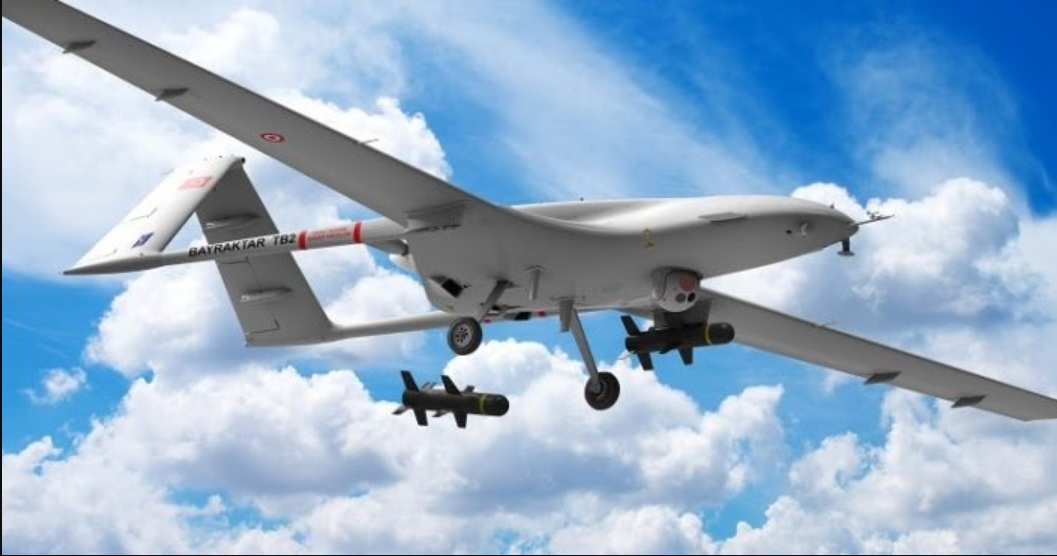
Bayraktar TB-2 (Redditt)


The answer could be that the drone can use for so-called "surgical strikes". And that means drones are useful also things like assassination missions. The thing is that drones are effective and dangerous tools is that they can be almost everywhere. Small UCAV drones can carry to operational areas even in the trunk of the car. 

And they can leave to the attack position. The drone can be a quadcopter or it can be aircraft-shaped like Boeing Dominator. So when the target is coming to the operational area it will go airborne. The aircraft-looking drone can use a balloon for lift-off. 

And the operator can make that strike from a long distance. That thing makes them very frightening. And the weapon systems must be frightening because they deny the attacks from foreign countries. The purpose of the military system is to put fear in the mind of enemies. And that thing makes all successful weapon systems rough, brutal and shocking. 


The new drones and solutions are shaping the next trends in the military.

"Ukraine Tests World's First Purpose-Built Robot Aircraft Carrier for Drones" (Kyiv Post, Ukraine Tests World's First Purp...